Wood
My experience with wood is much more formal than my experience with metal. In college, I studied furniture design with a concentration in nature culture, and sustainability studies. In my program, design thinking was taught through woodworking, so my thought process and design methods are much more structured and conceptually driven.
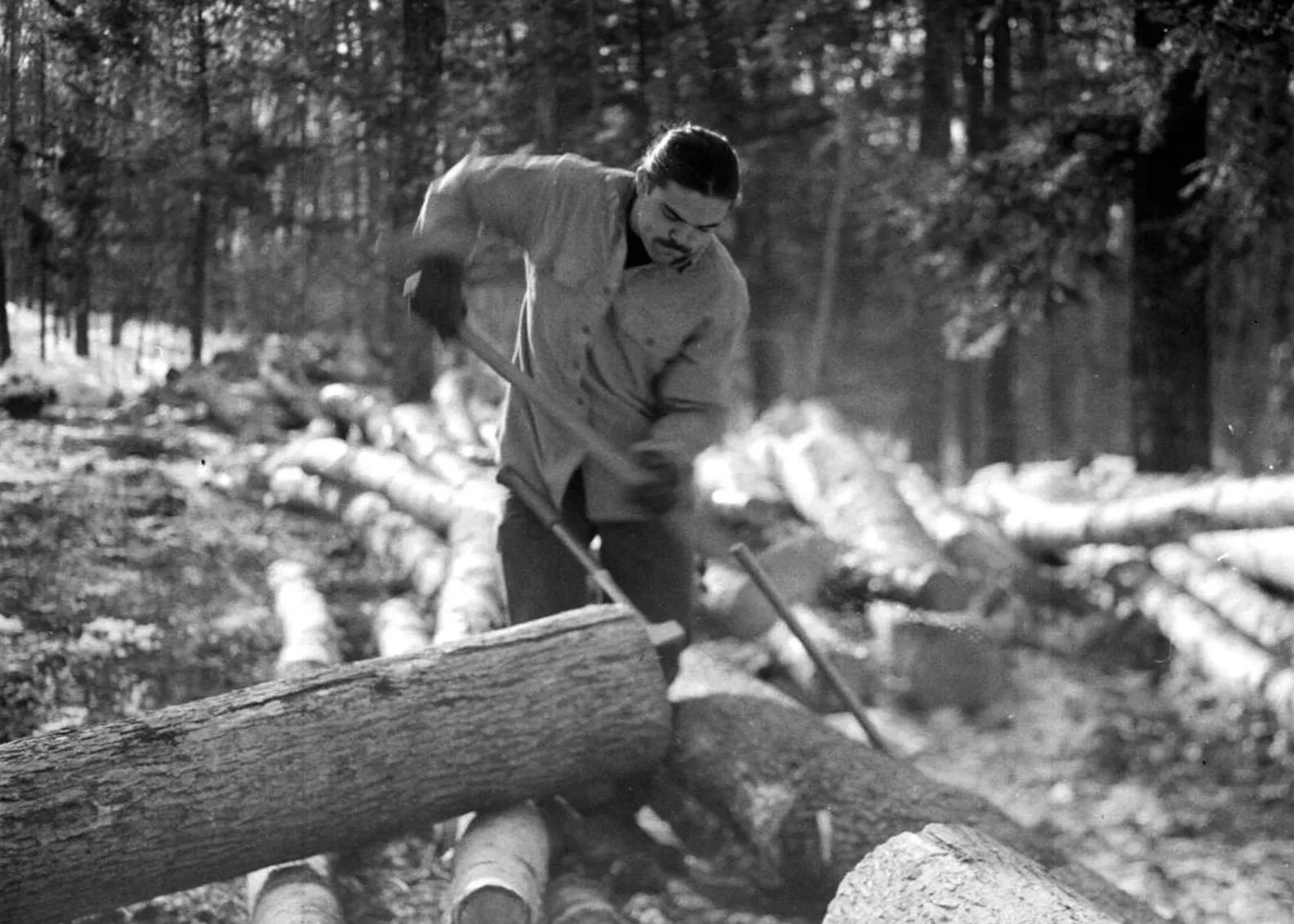
Photo by Broadus Mobbs
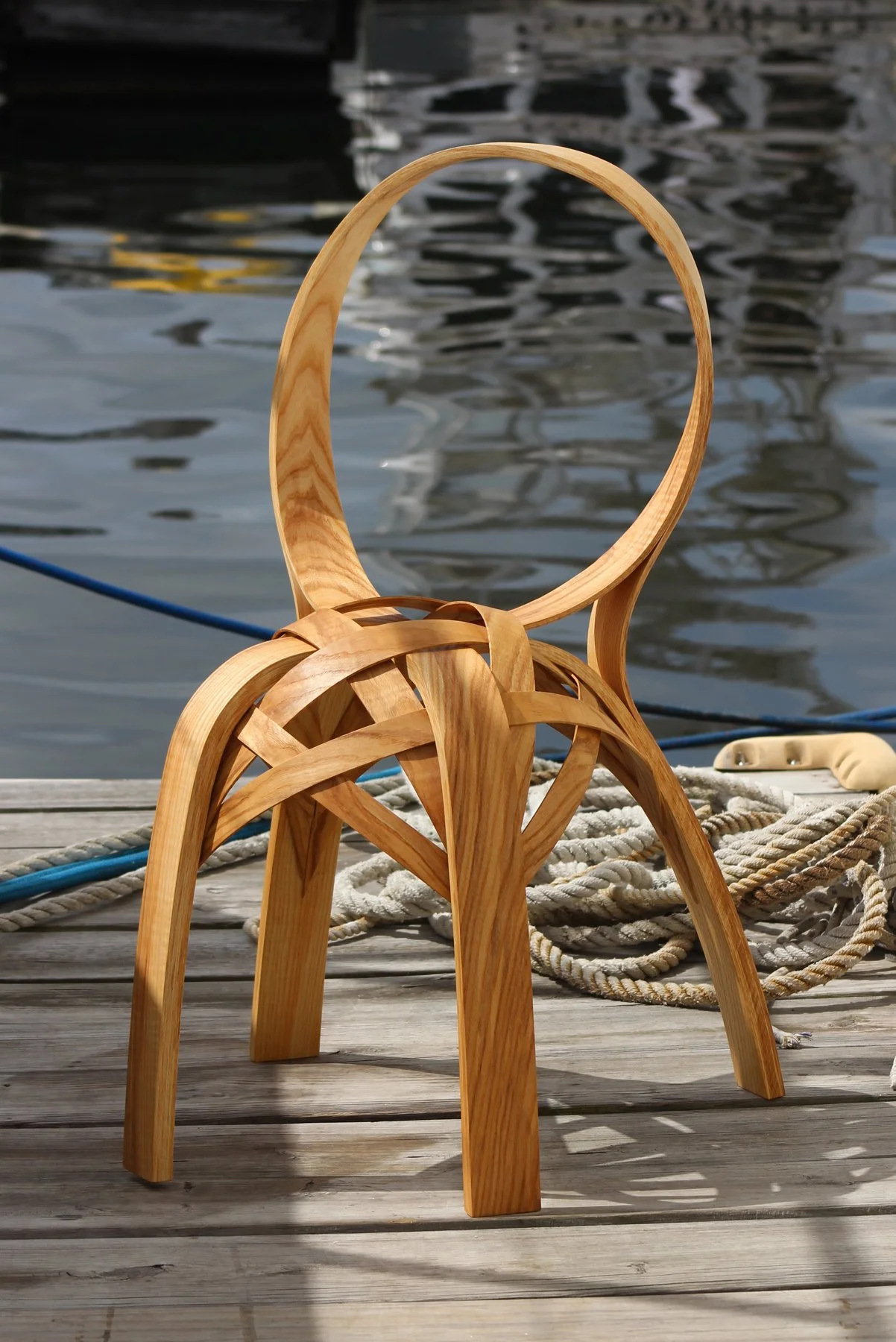
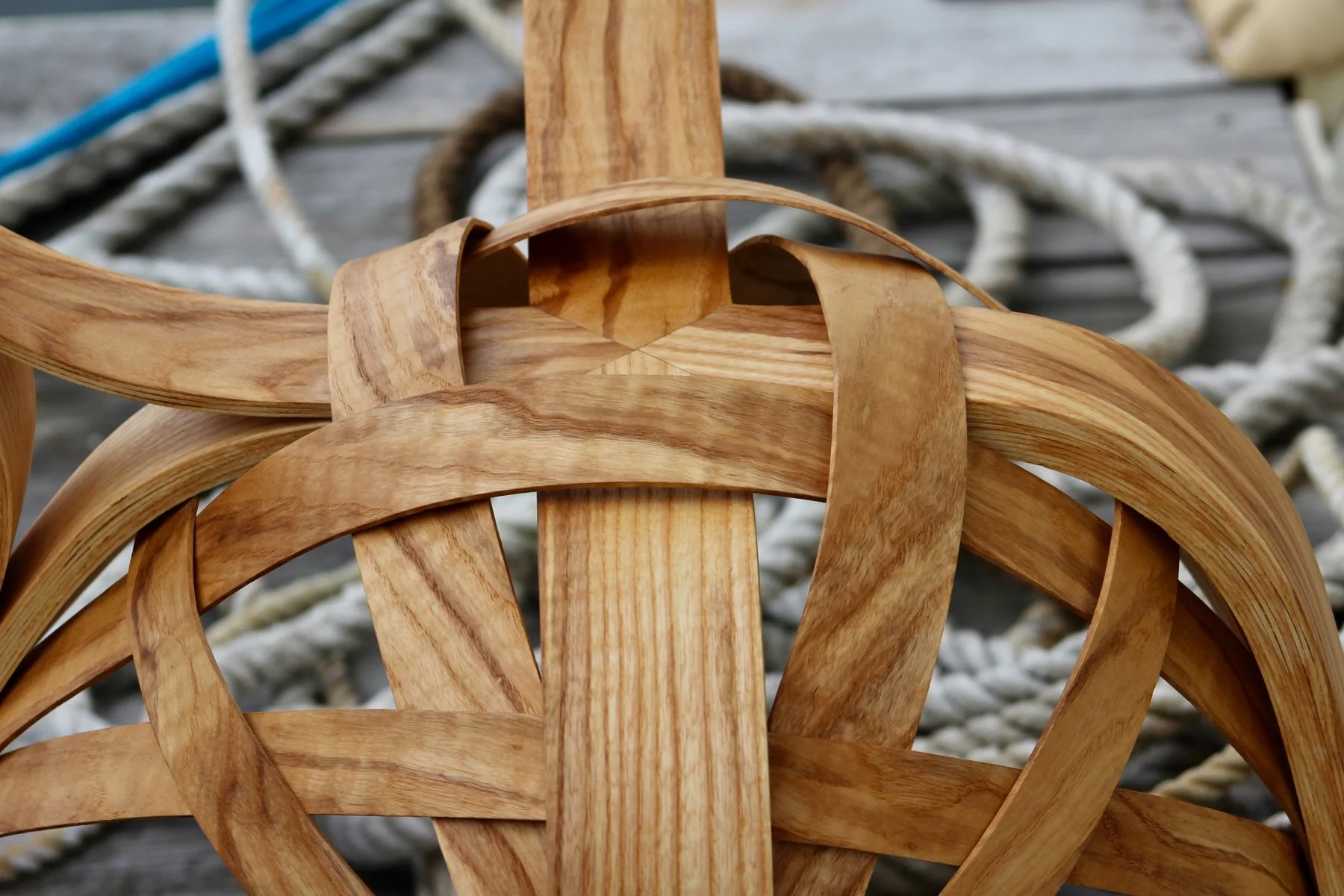
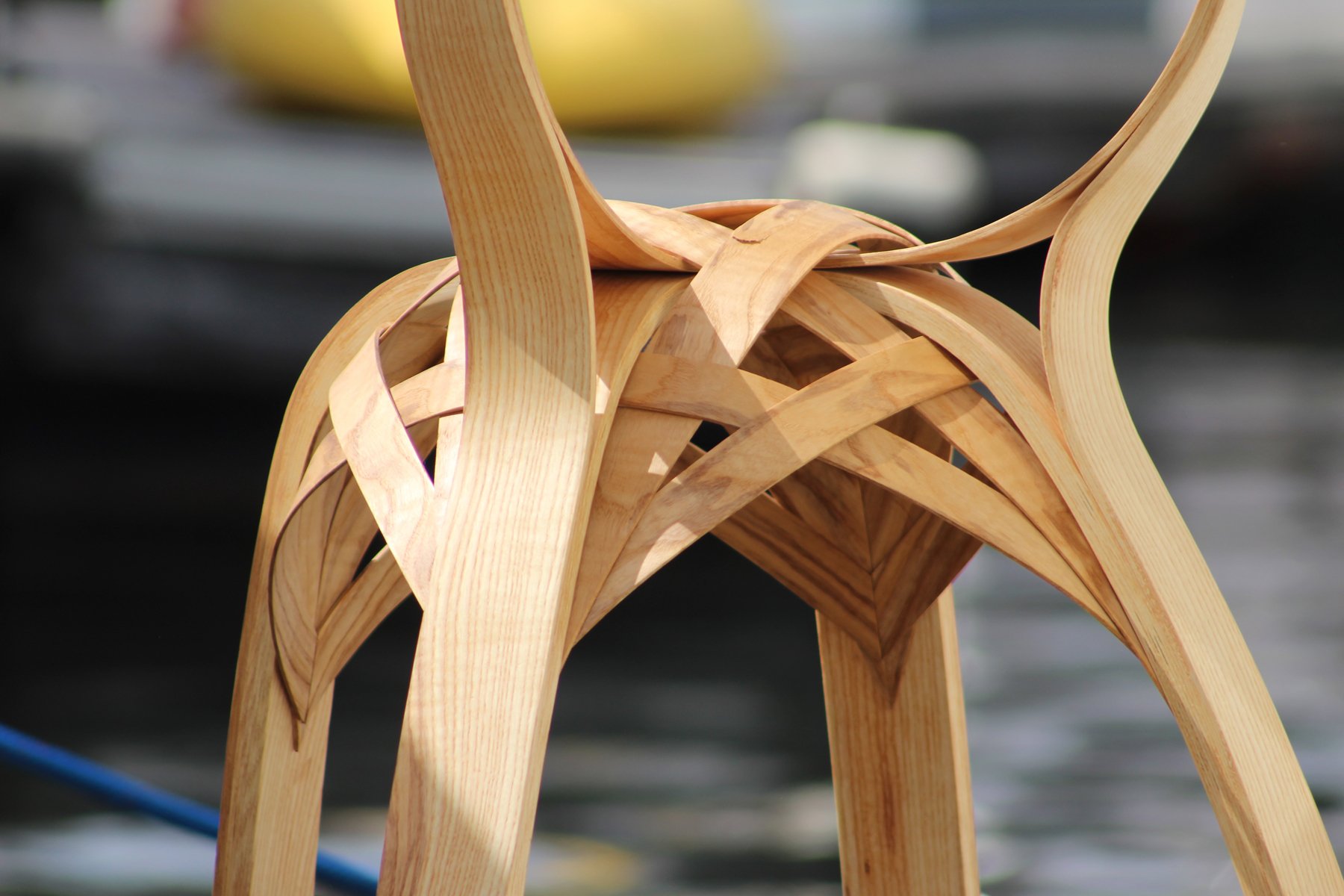
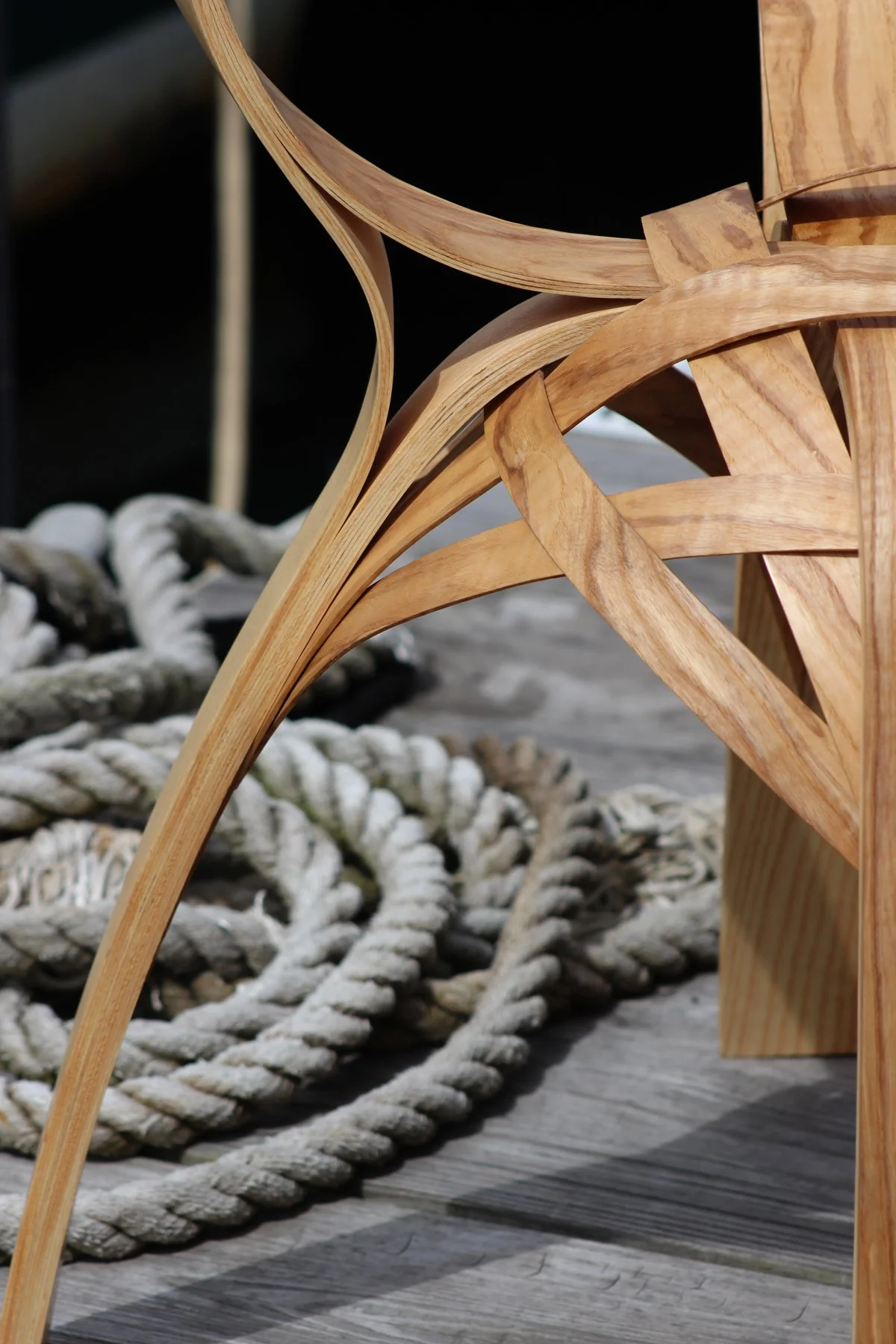
Bowline chair
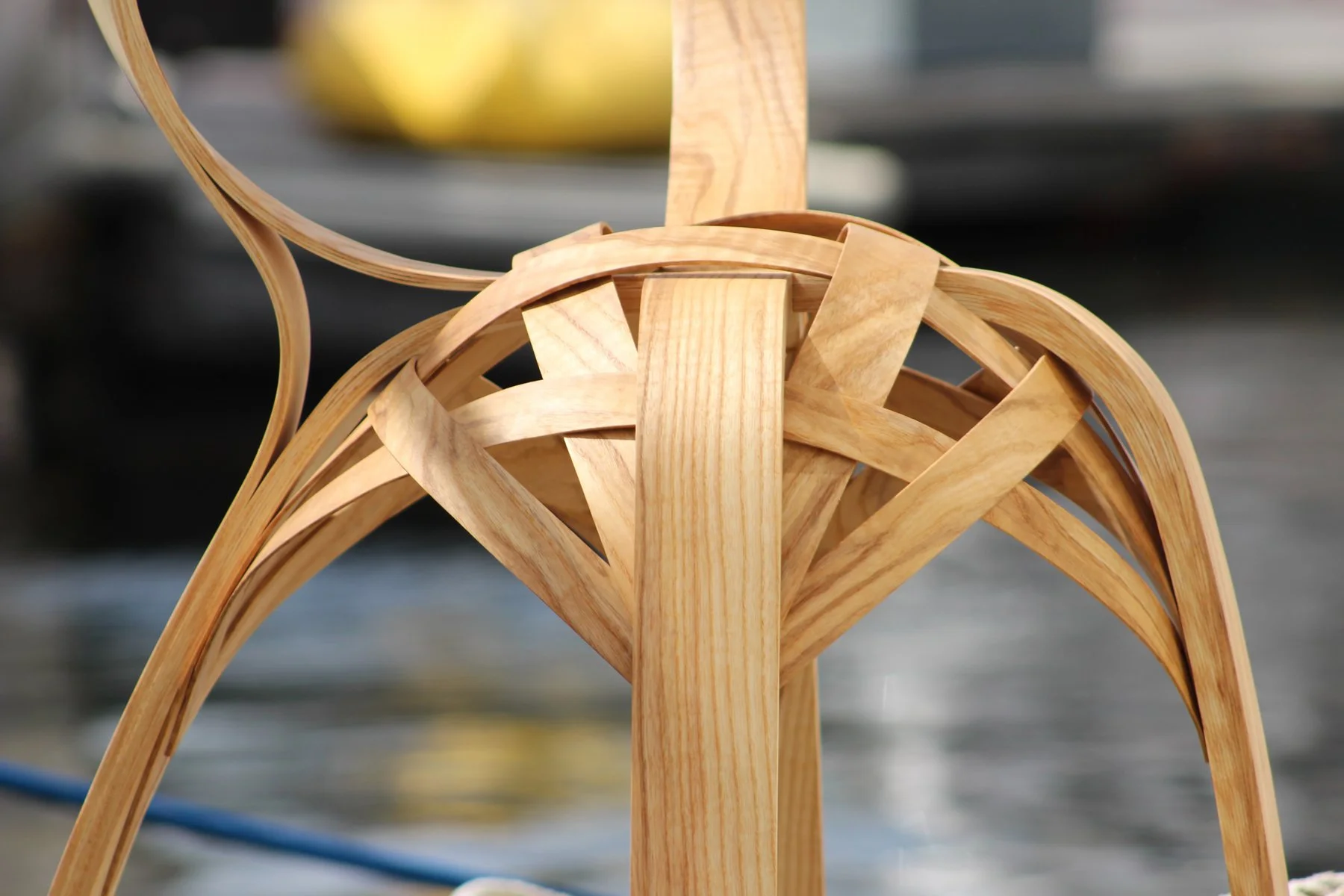
Ash bent laminations and steam bends, 2022
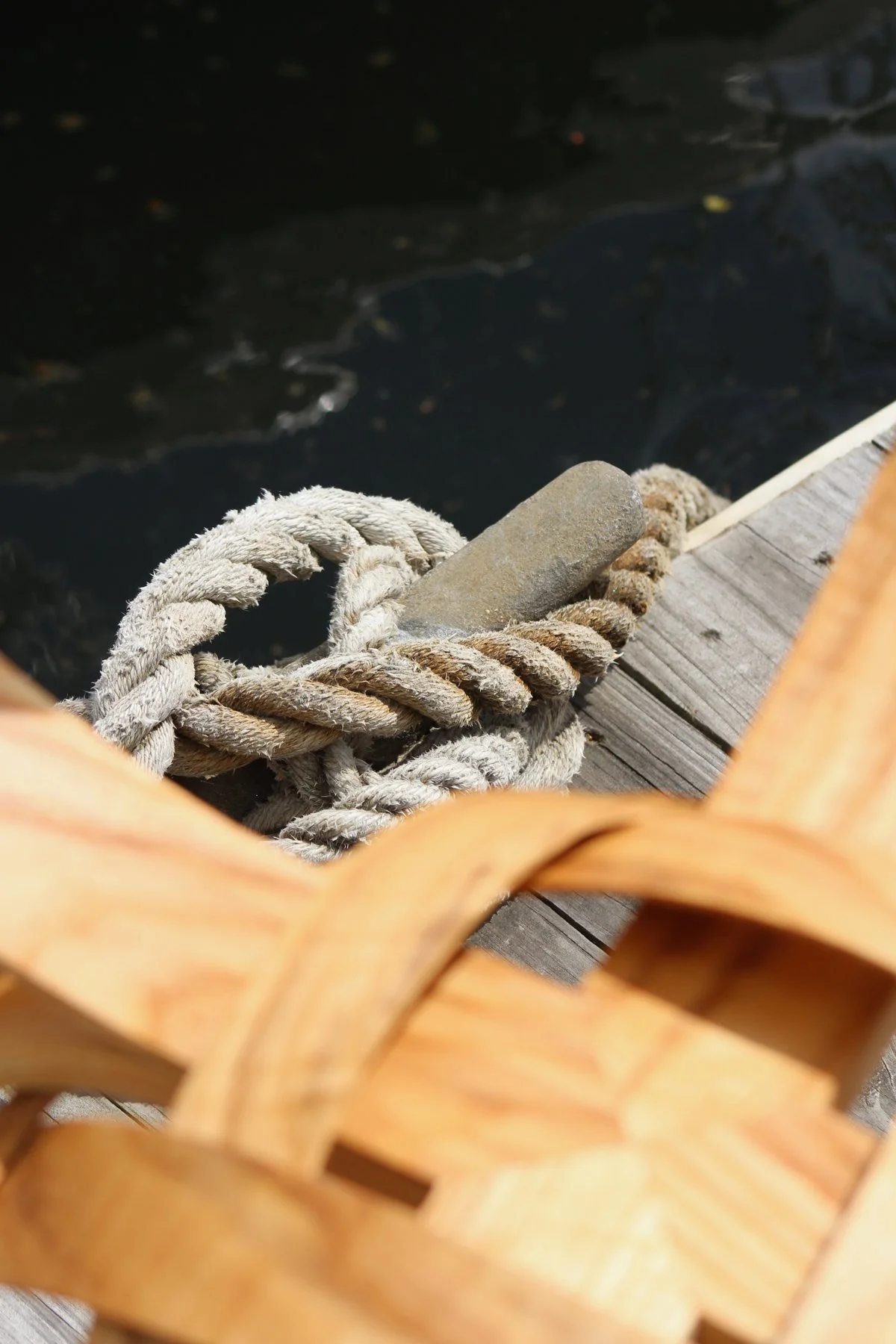
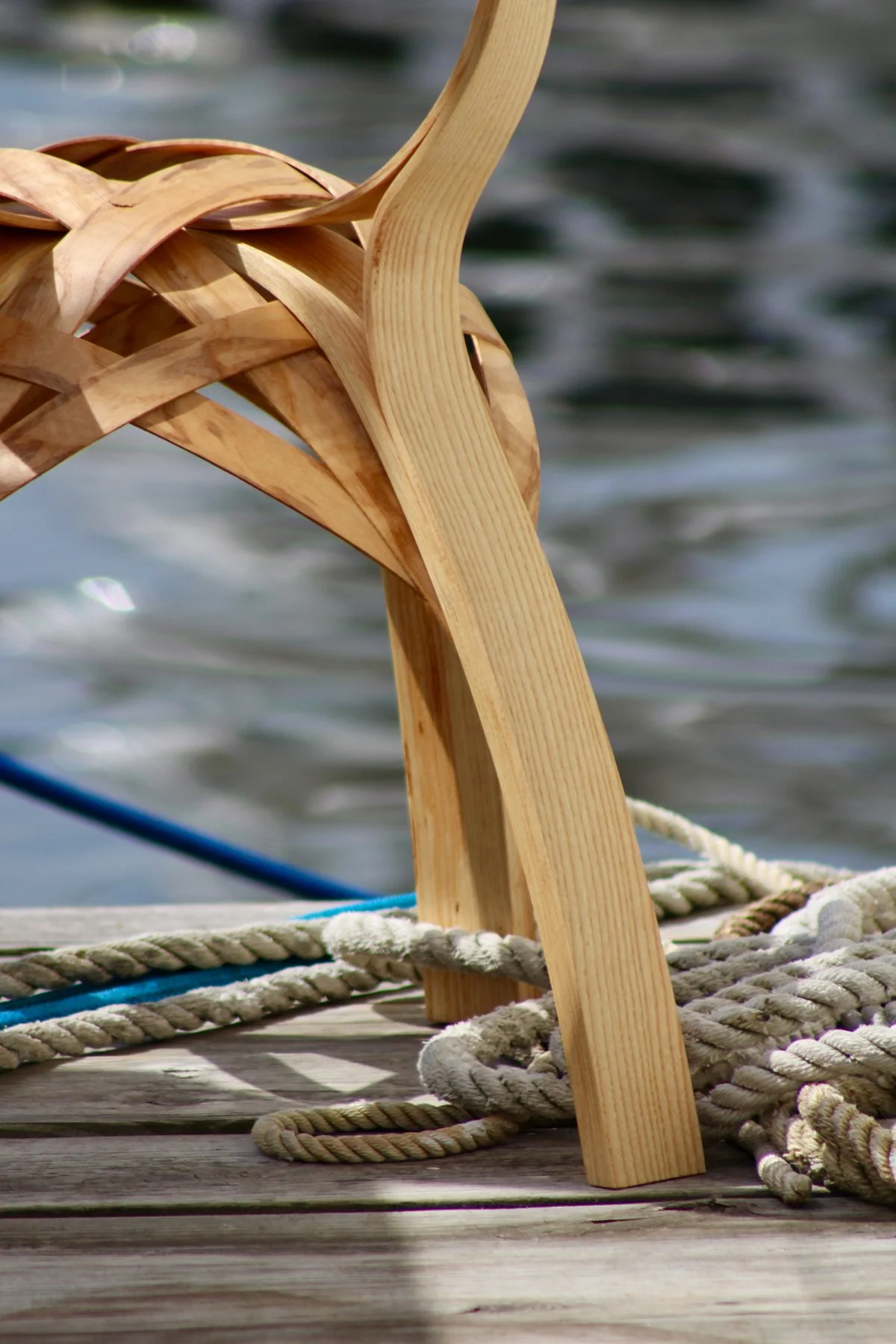
This chair is an exploration in woven wood bending inspired by knot patterns in traditional sailing. Starting with scaled model making in chip board, this project led me into a tangled ball of technical challenges which forced me to think through uncommon solutions for wood bending with compound curves. Similar to the bowline knot, each component is necessary to give structure to the rest, creating a fixed loop within the knot itself.
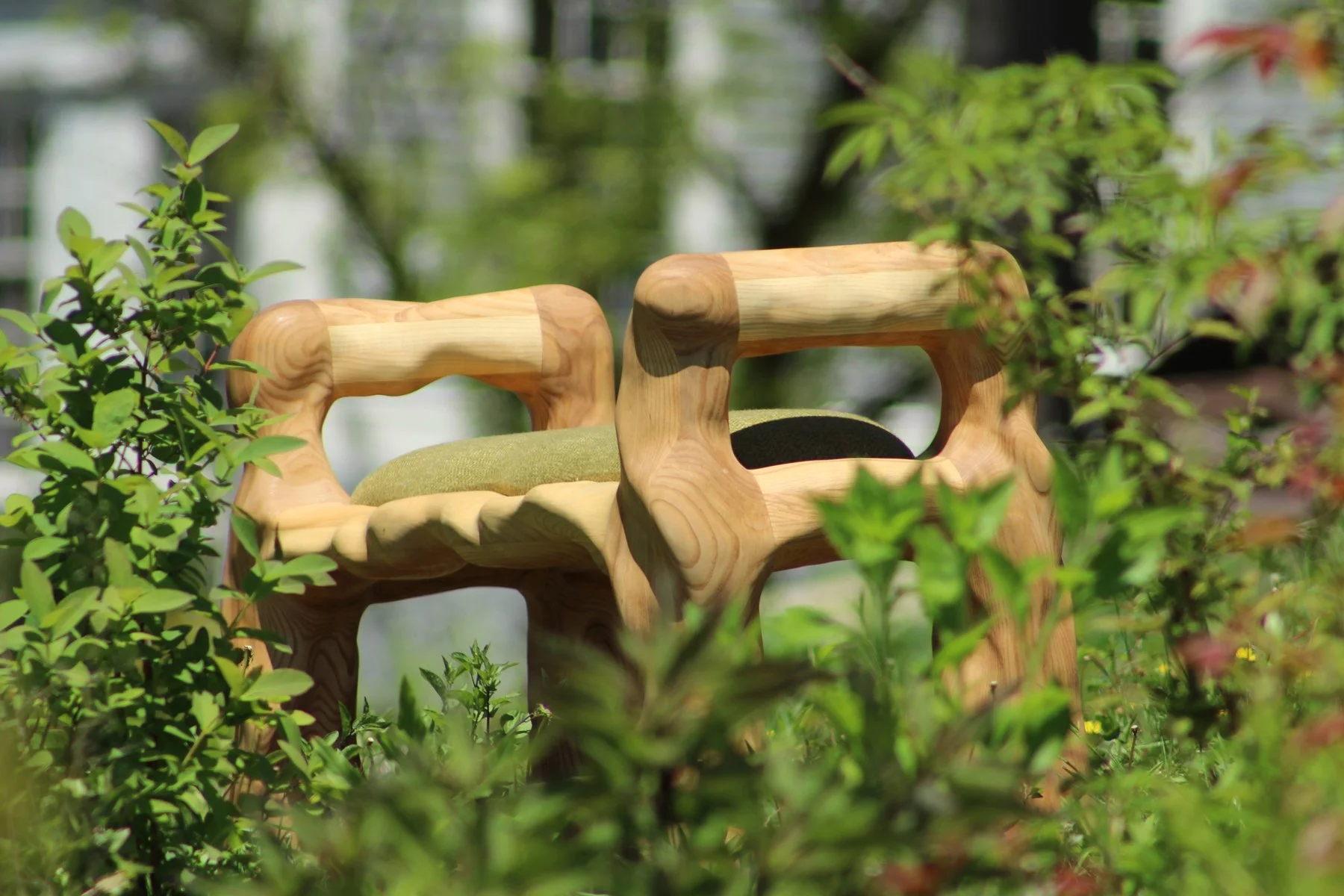
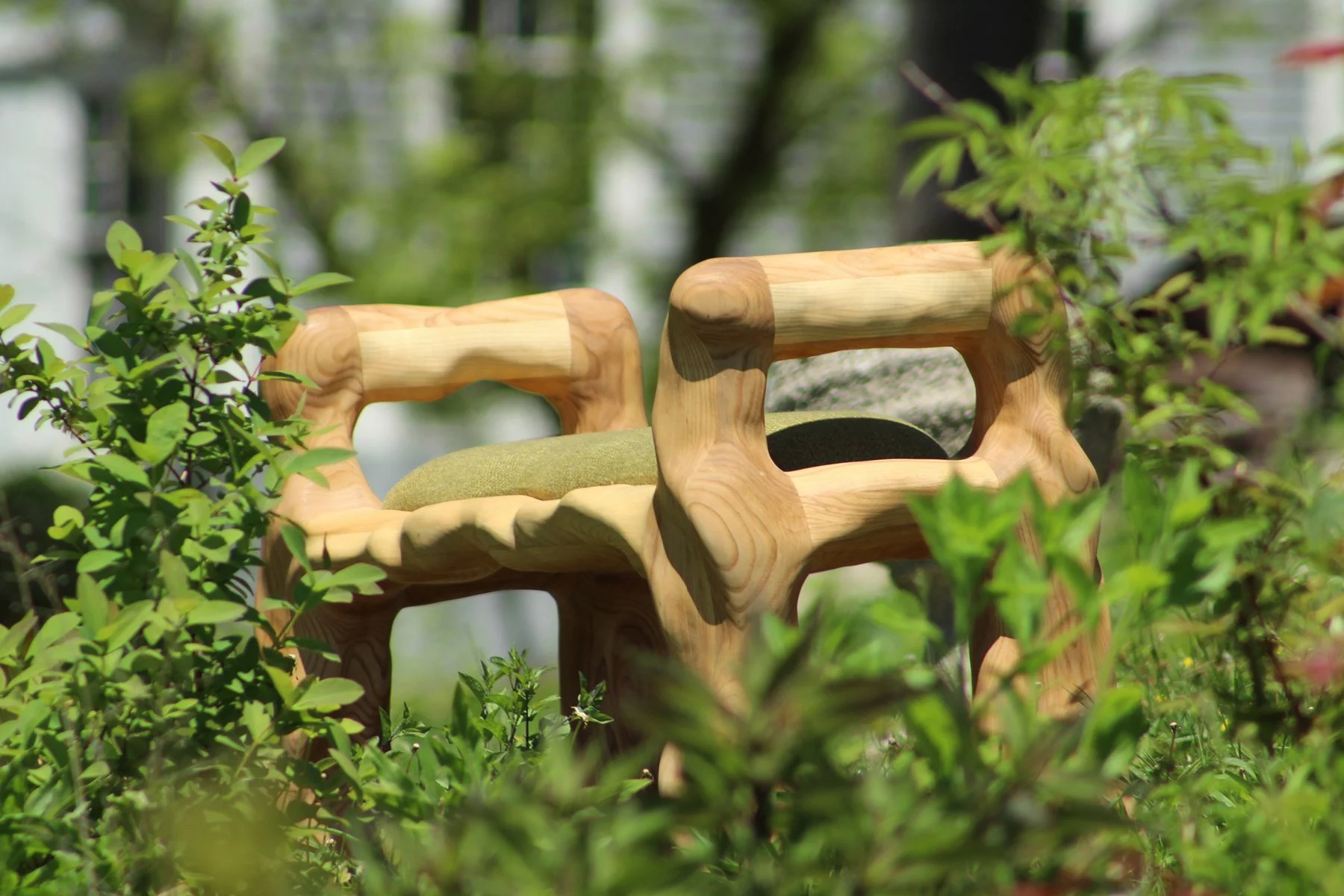
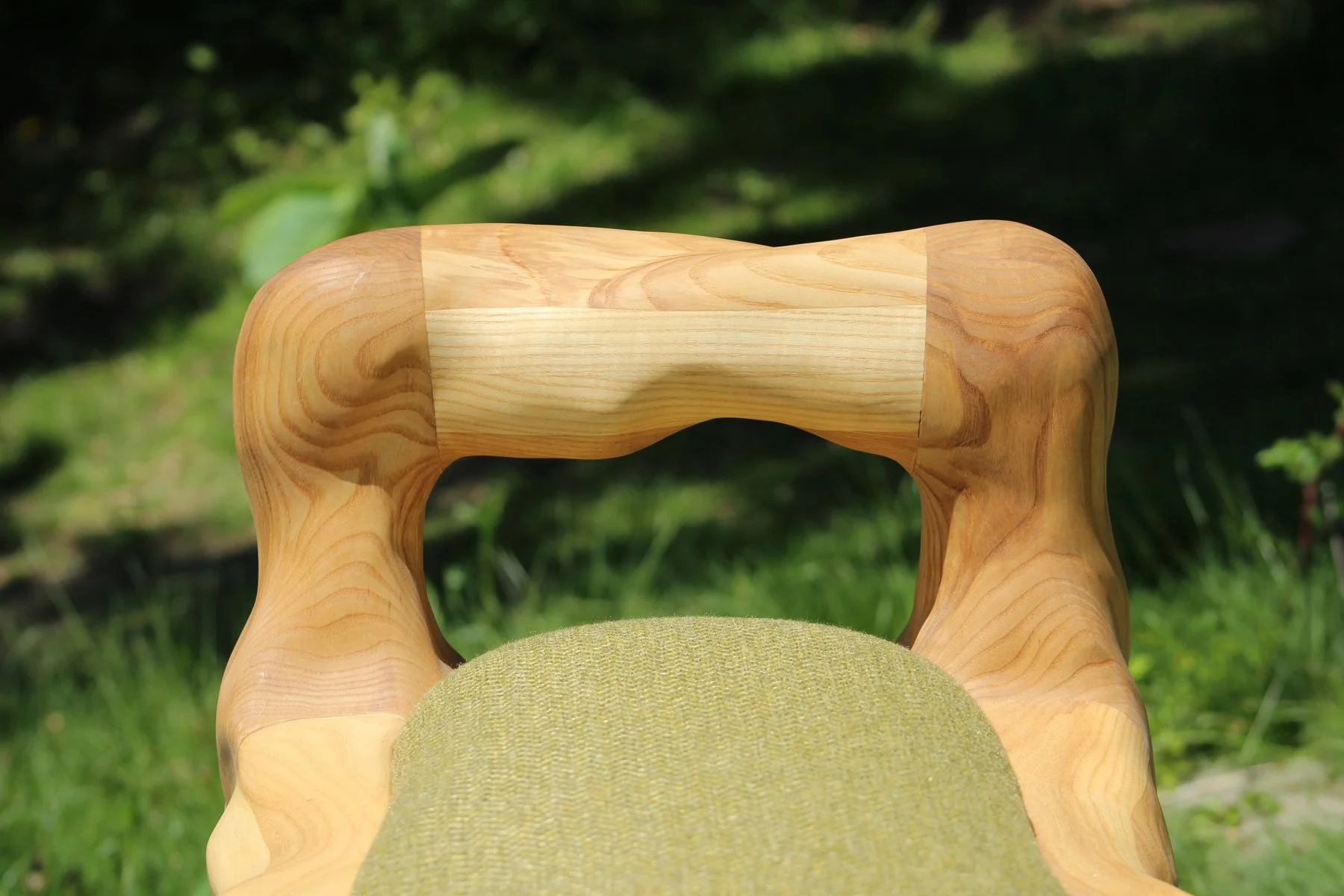
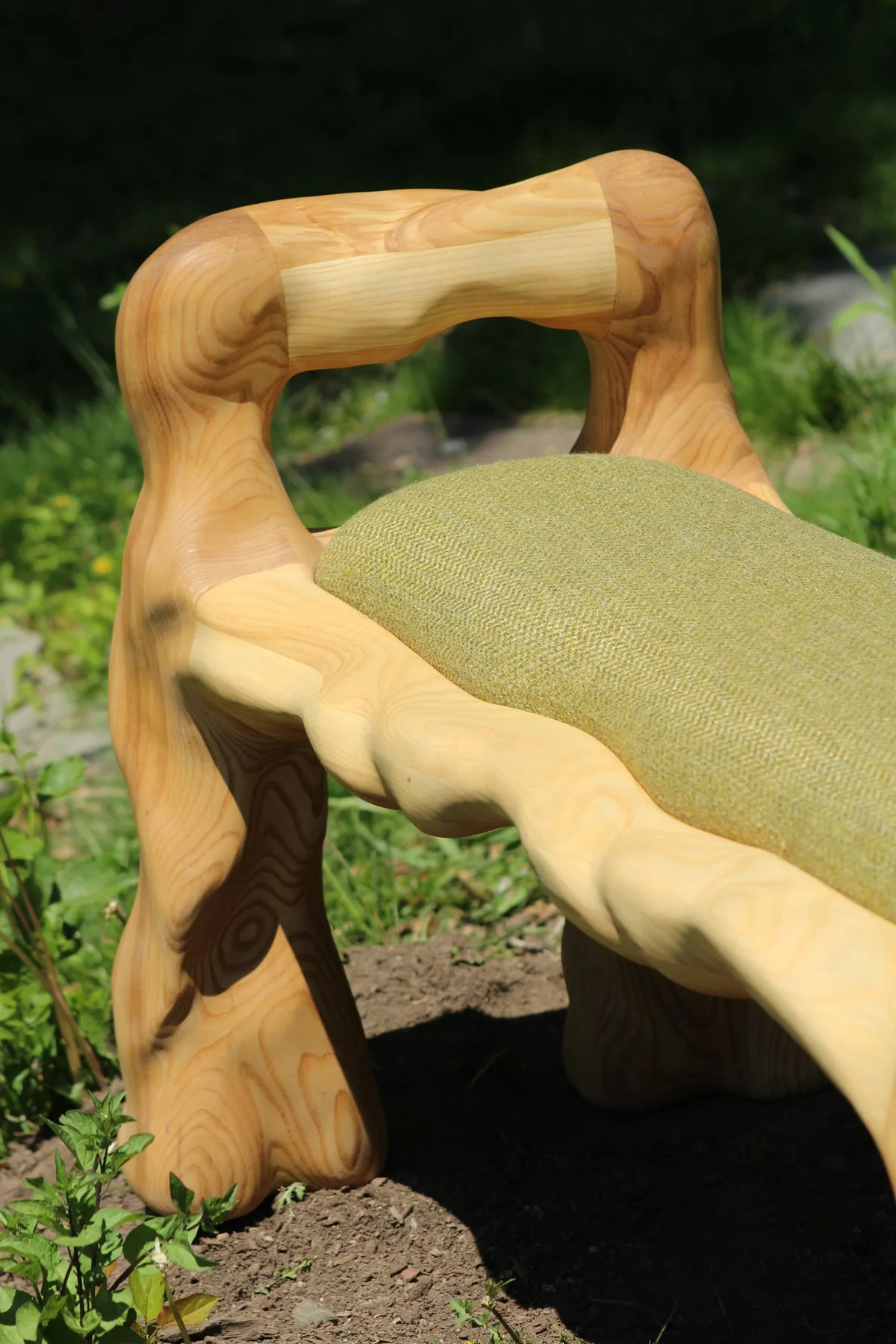
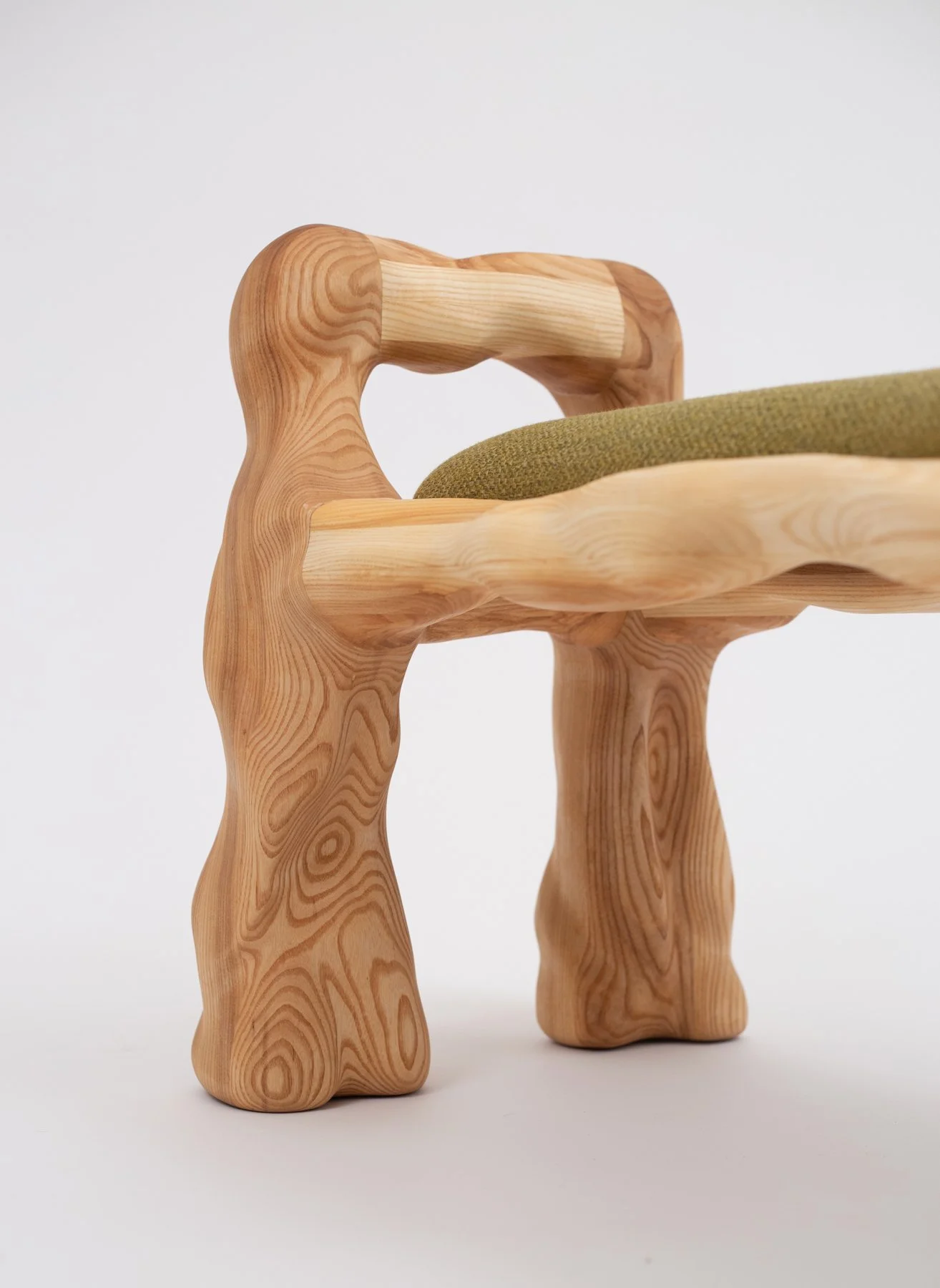
Mossy Bench
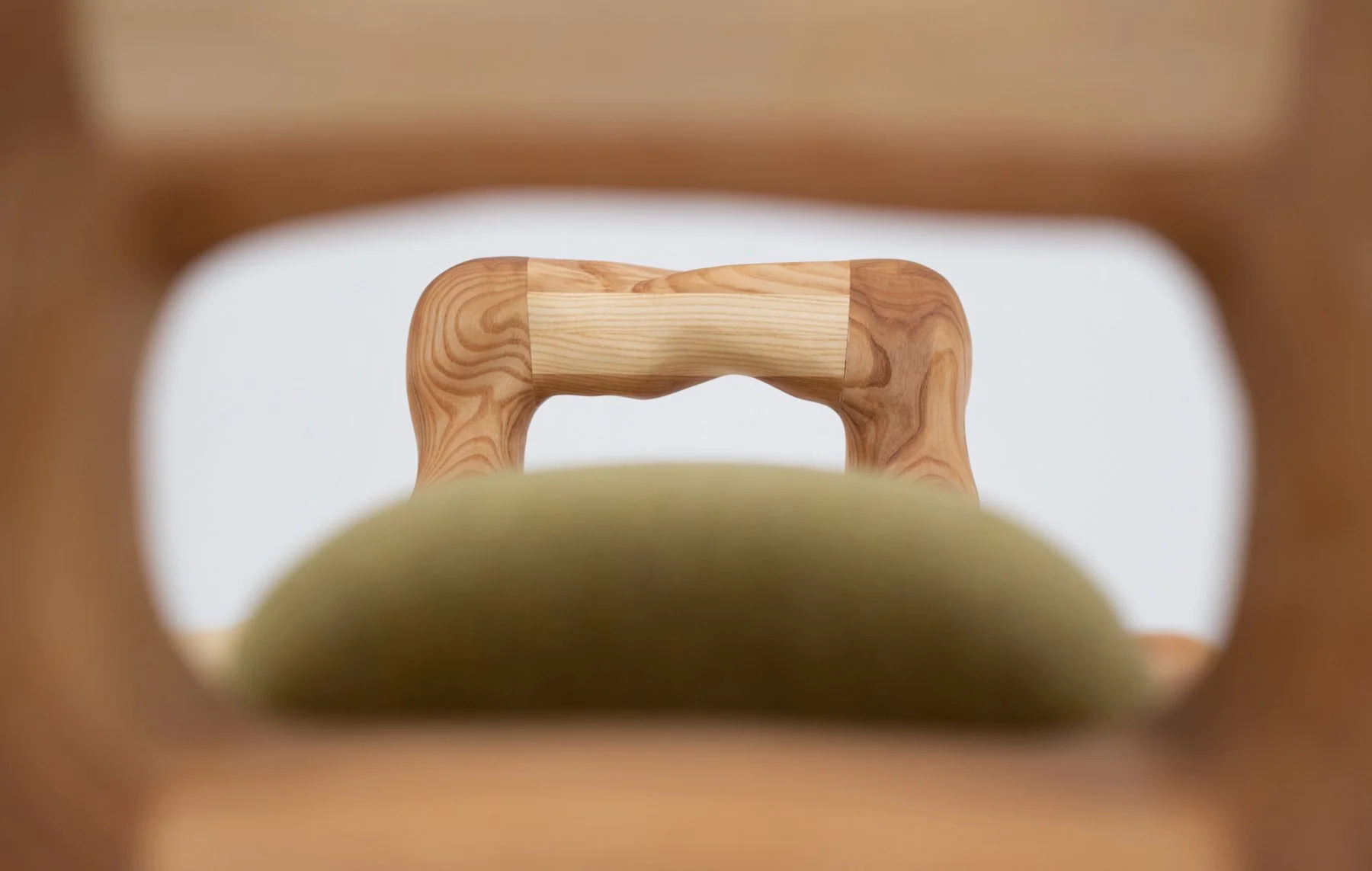
Carved Ash frame with slip seat upholstered in green twill, 2021
While living in the Pacific North West, I fell in love with sitting. Sitting and watching — local wildlife, cloud patterns, the mist rolling in and out of the bay. This bench mimics my memories of that time and place - wild and calming, perched and present, rooted and watchful.
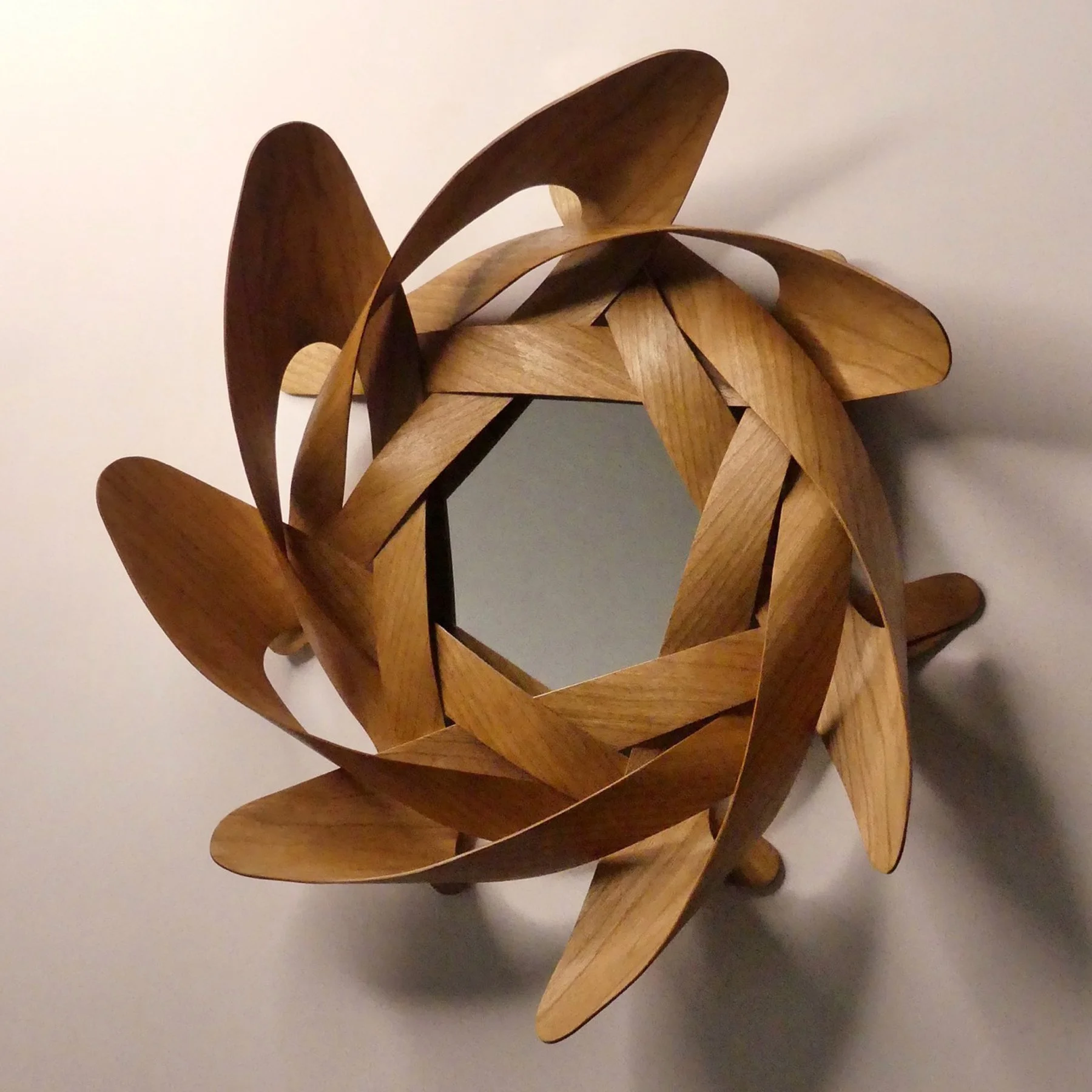
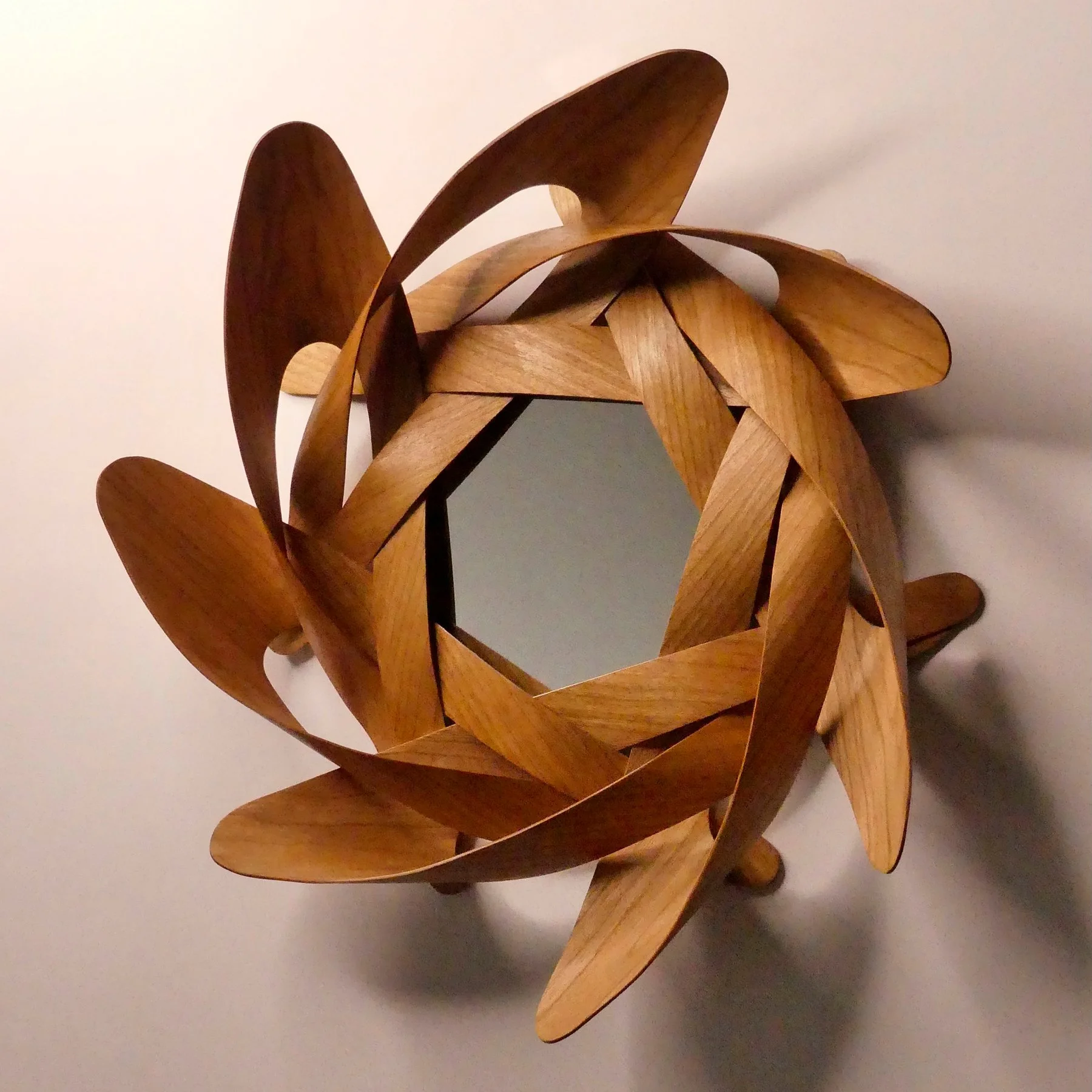
Möbius Mirror
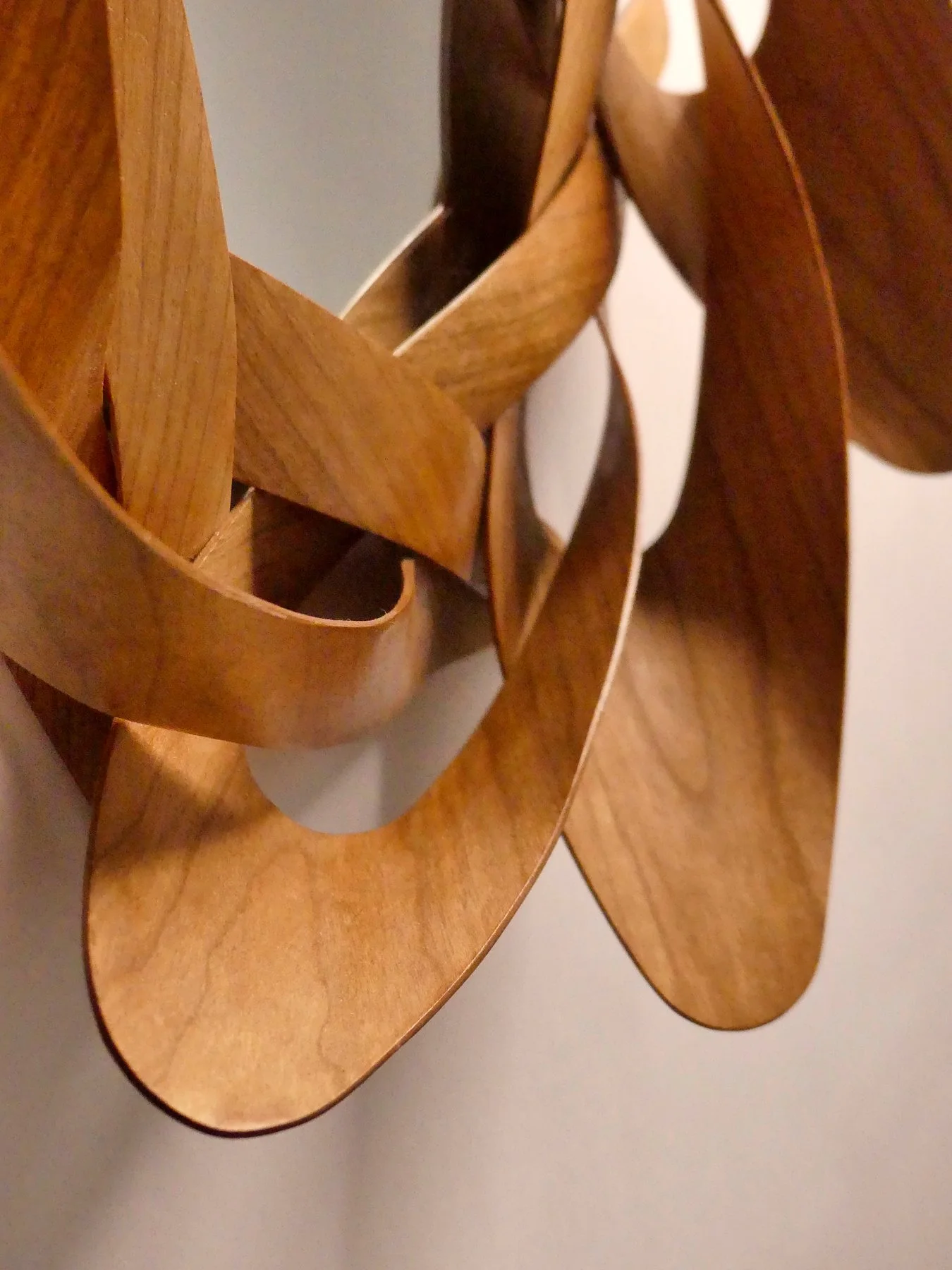
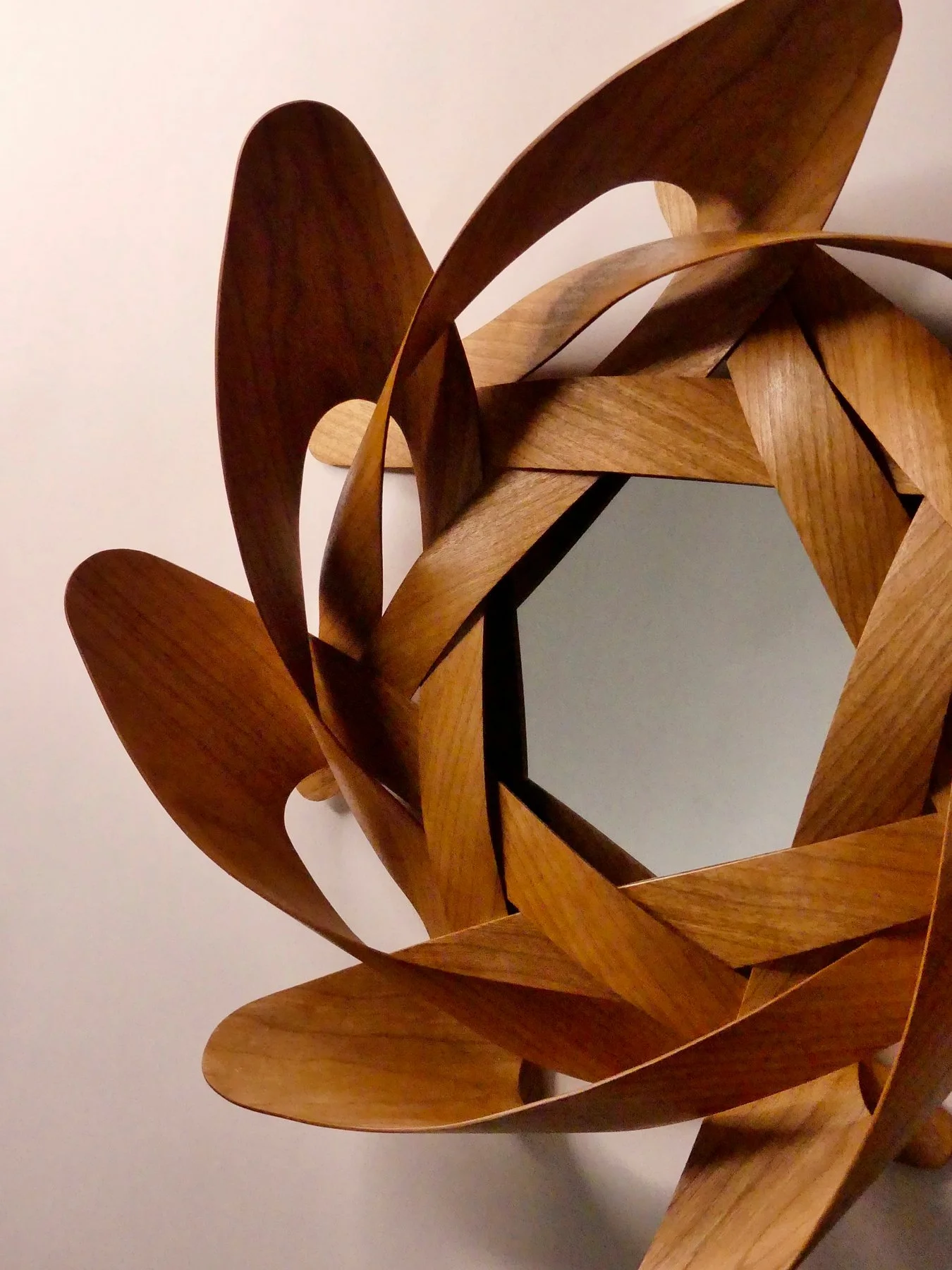
Cherry wood bent laminations finished with shellac, 2022
Möbius strip: a non-orientable surface that can be formed by attaching the ends of a strip of paper together with a half-twist; a mathematical phenomena discovered in 1858 that had appeared in Roman mosaics as early as the third century CE.
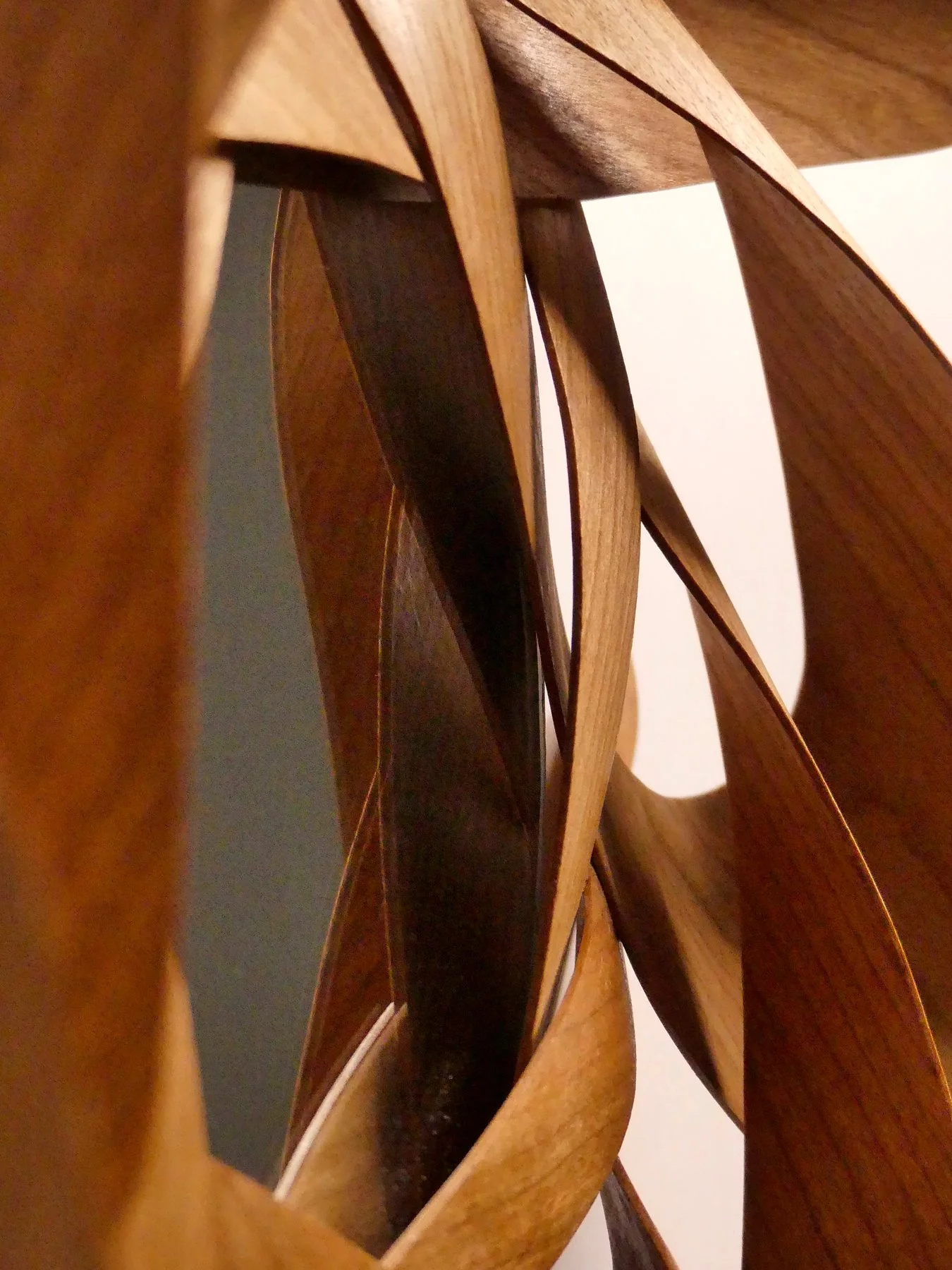
This mirror is comprised of seven ply-wood Möbius strips woven together. Each “ear” is made of three layers of cherry veneer laser cut to a specific “V” shape — biased towards its leading edge and tapered on each tail. This profile allows for flexibility in certain areas and stiffness in others directly defining the shape after molding. Each component feeds through the loop of the next and locks under the ear of the following resulting in a circular form with a heptagonal opening in the middle.
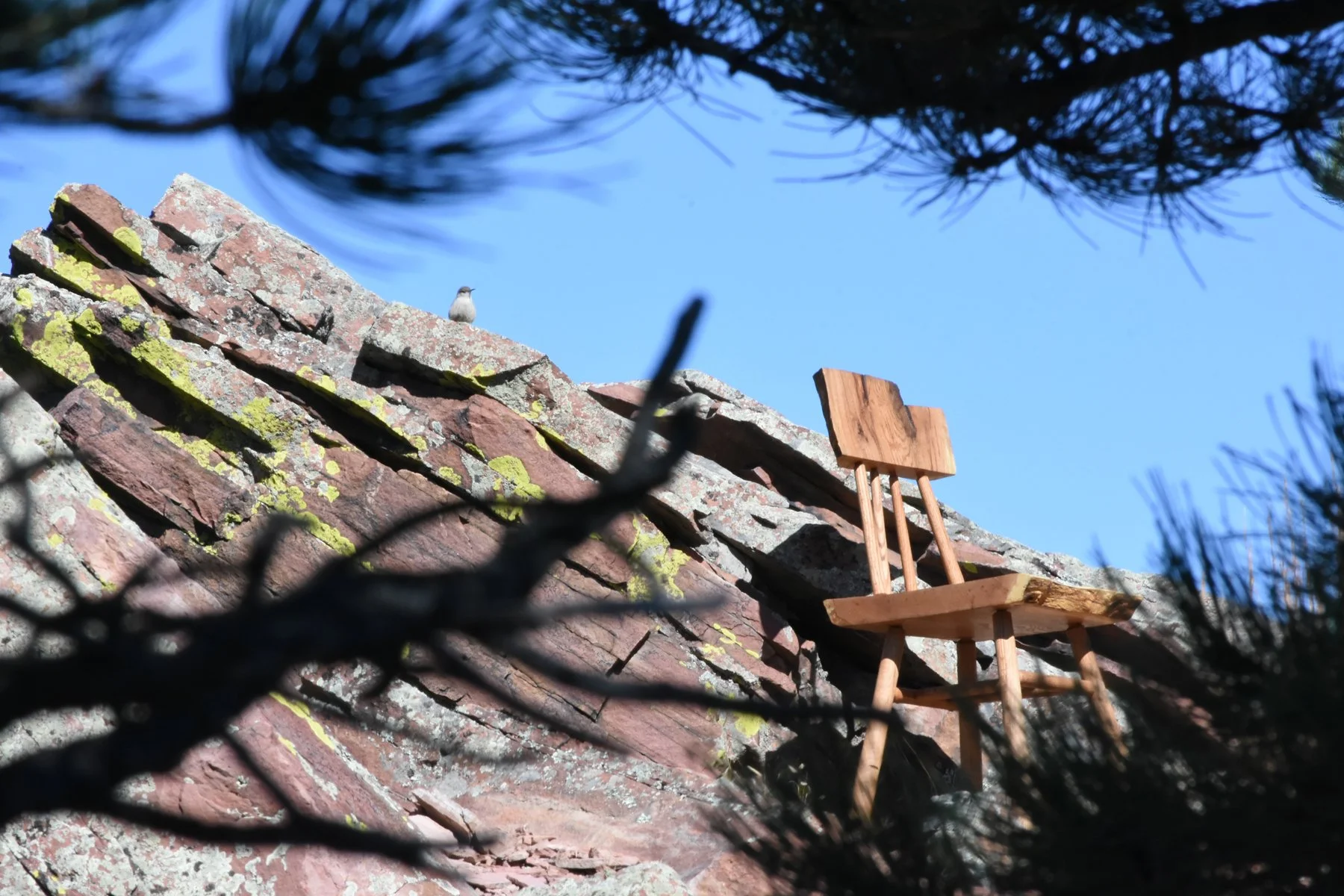
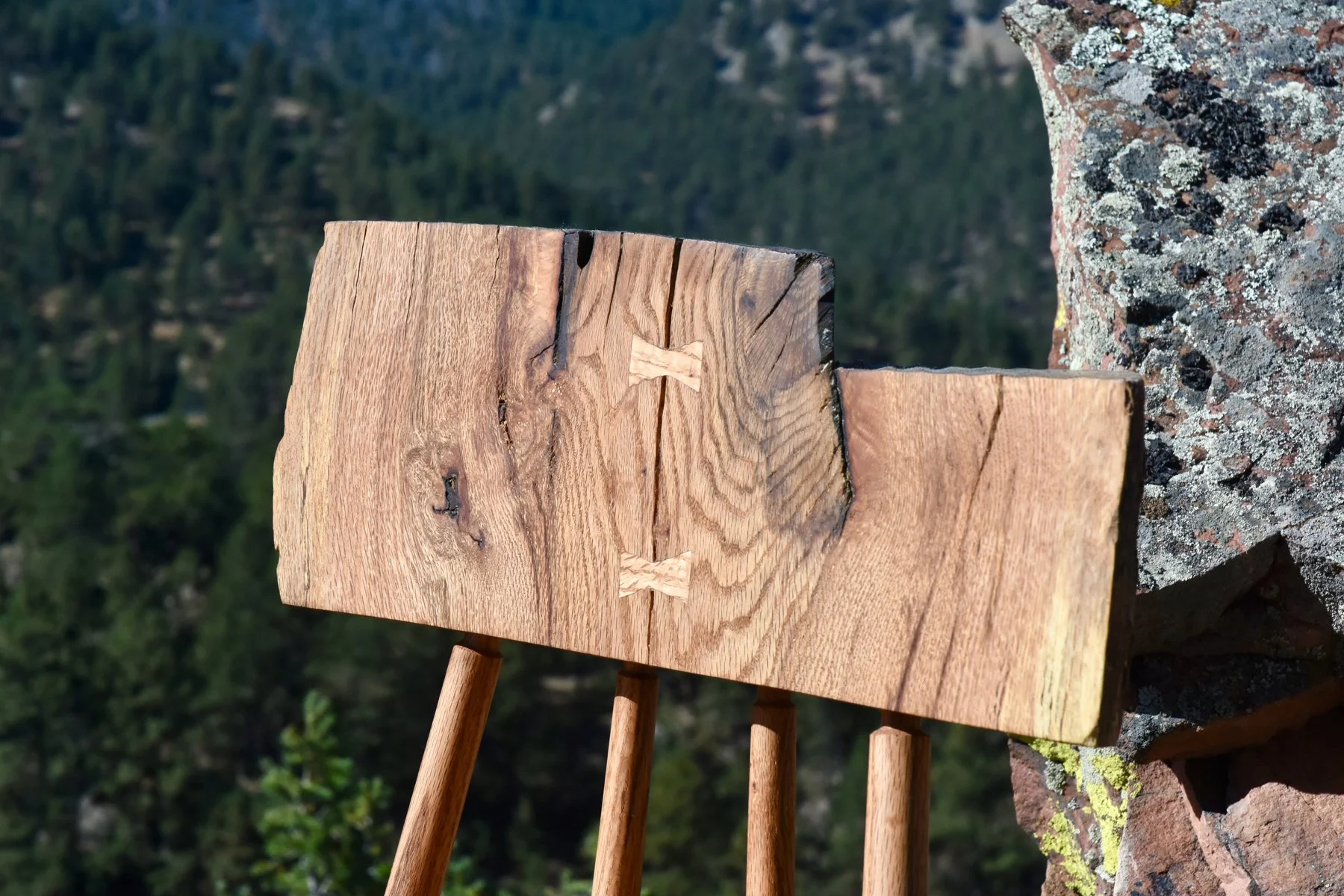
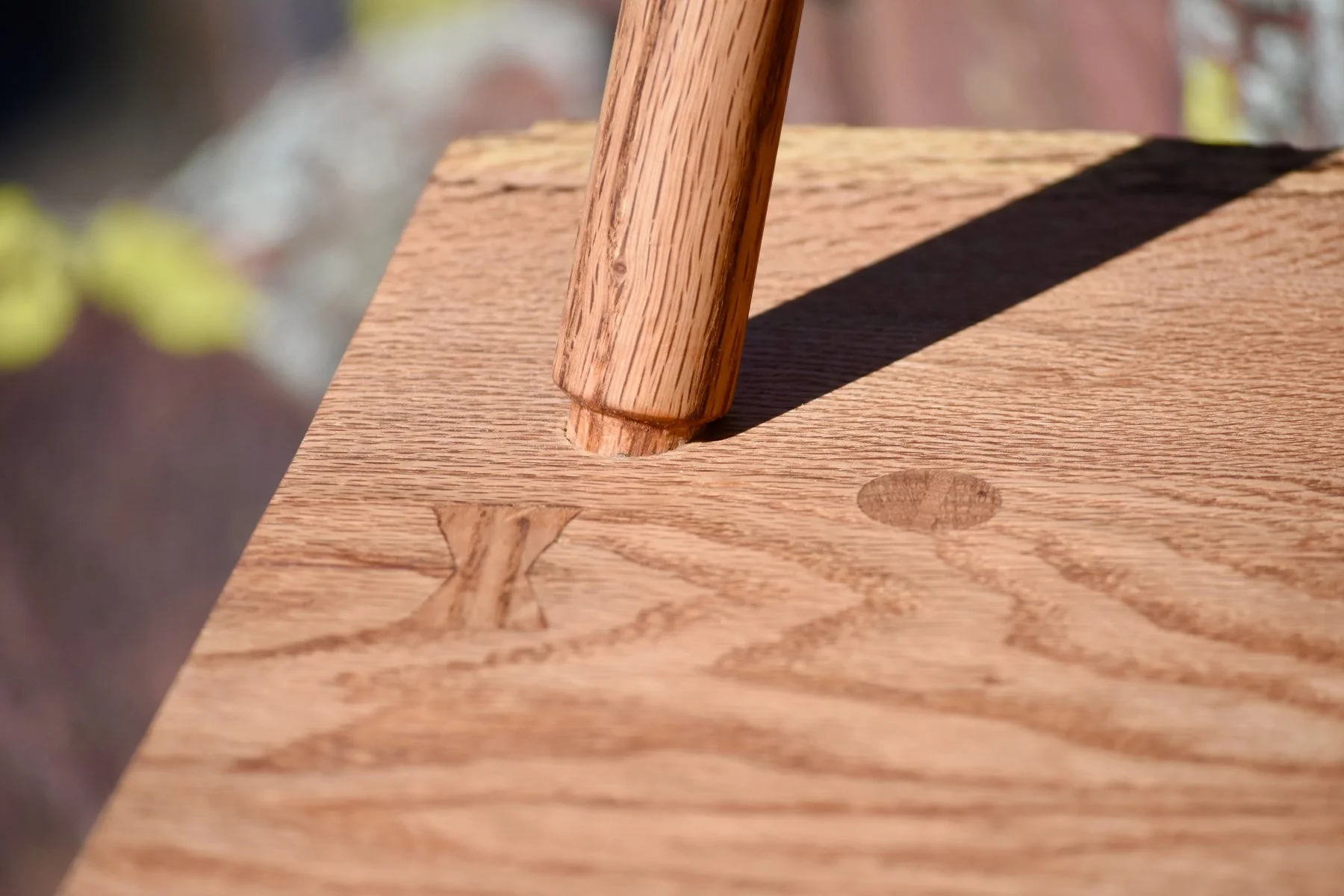
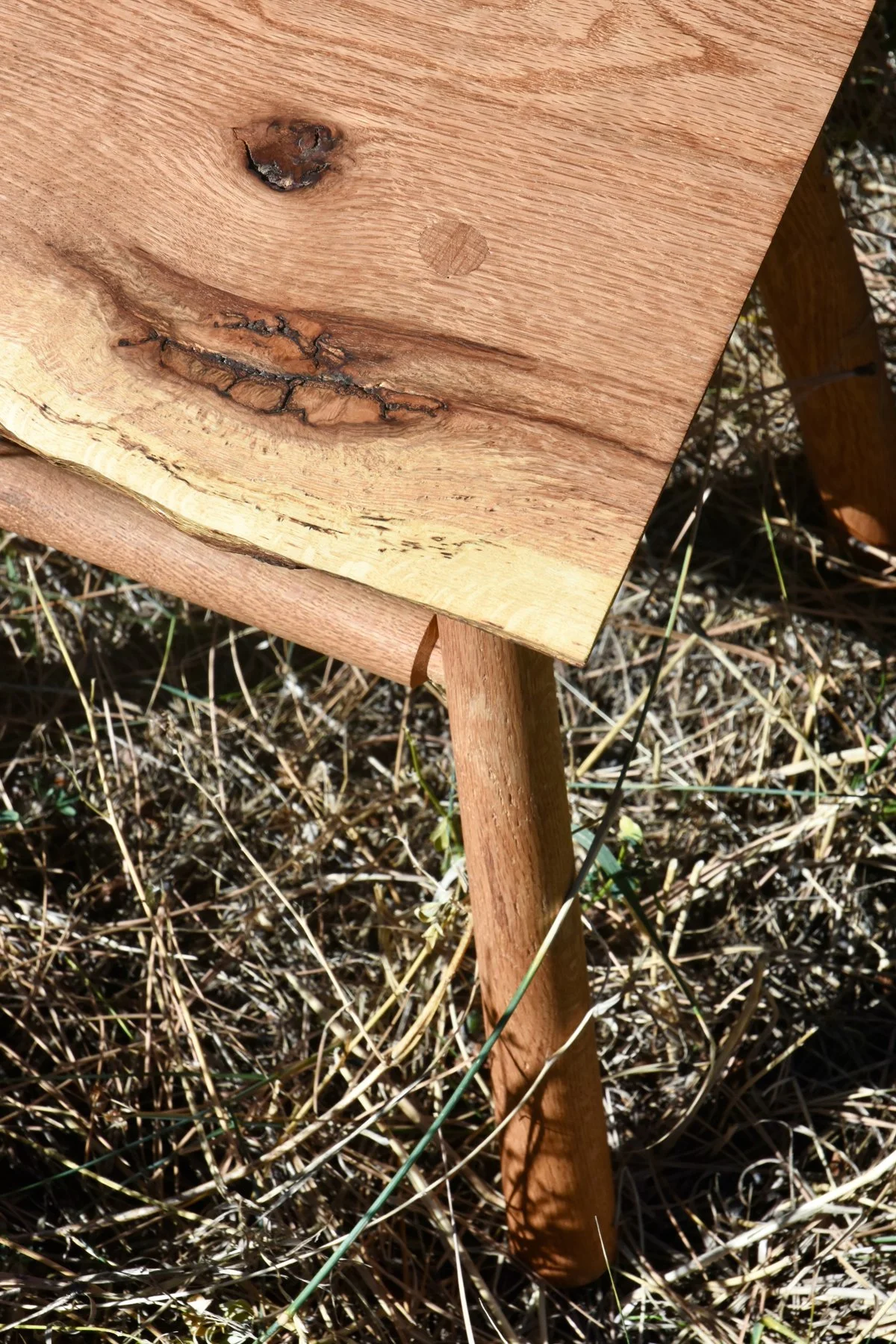
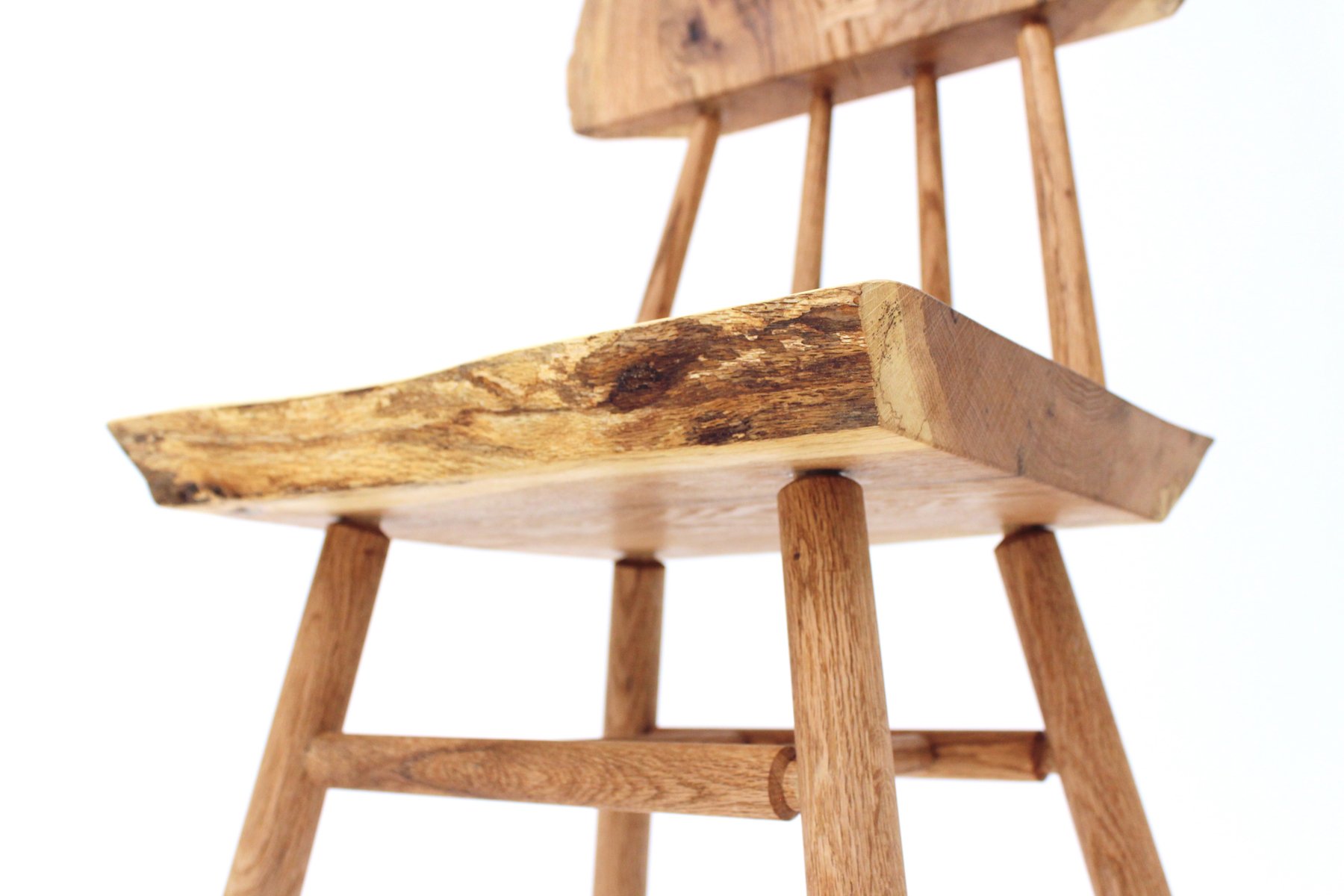
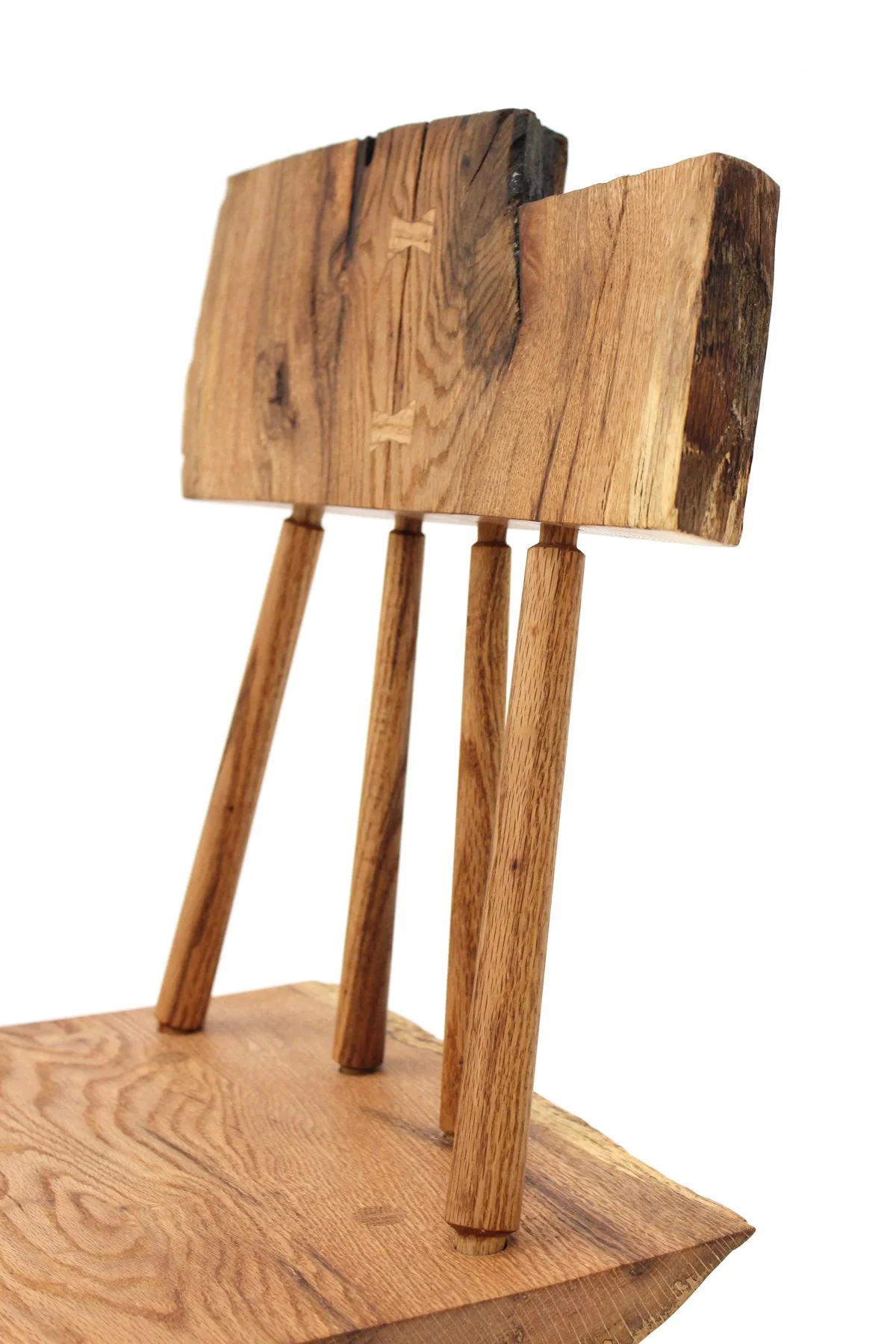
Perch Chair
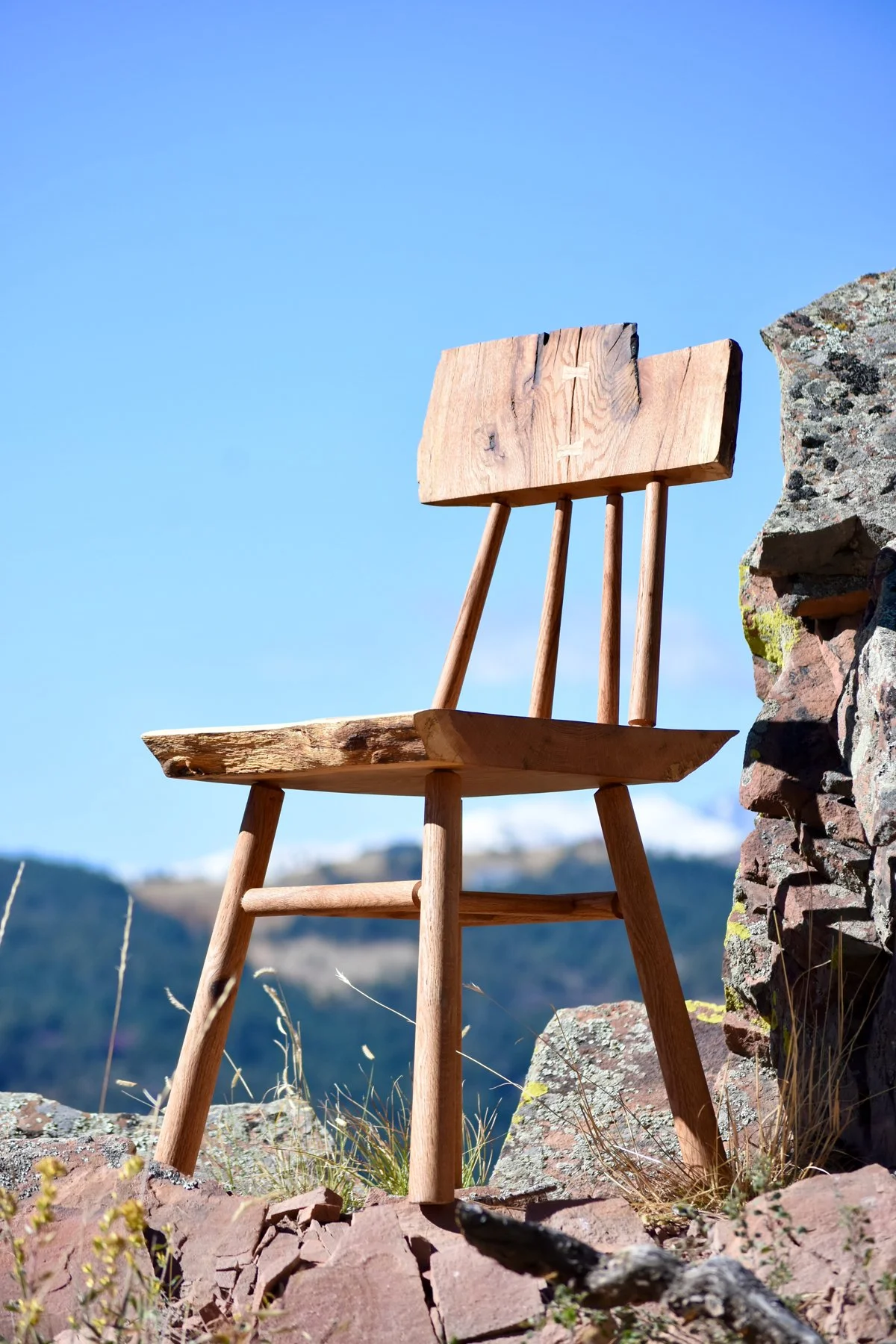
Red Oak, 2023
Built for moments of reflection. Currently in use by my mother Rev. Dr. Lorraine Leist’s in her office at Montview Boulevard Presbyterian church in Denver, Colorado. There, it supports her Older Adult Ministry and by extension her congregation.
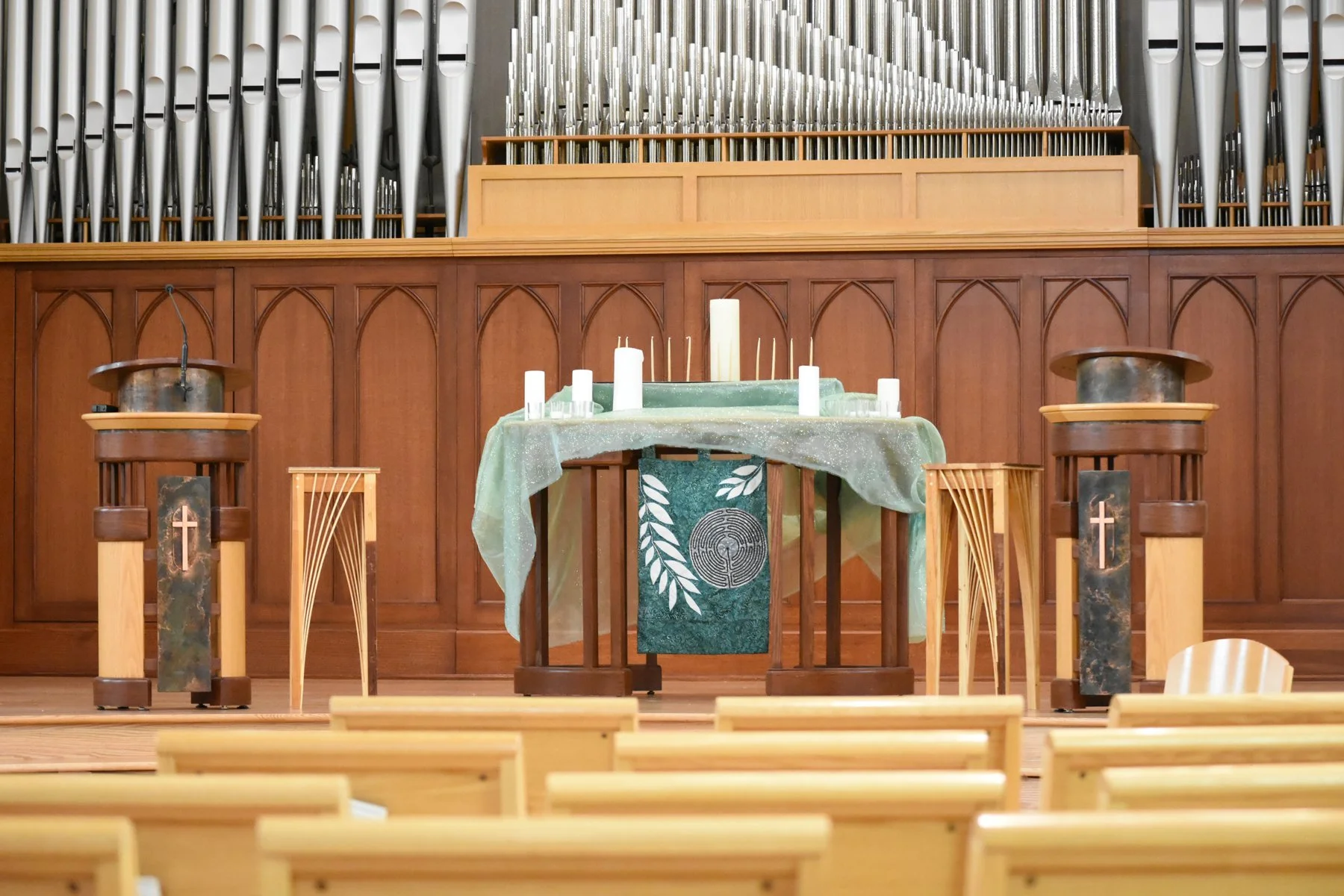
UCC Boulder Project
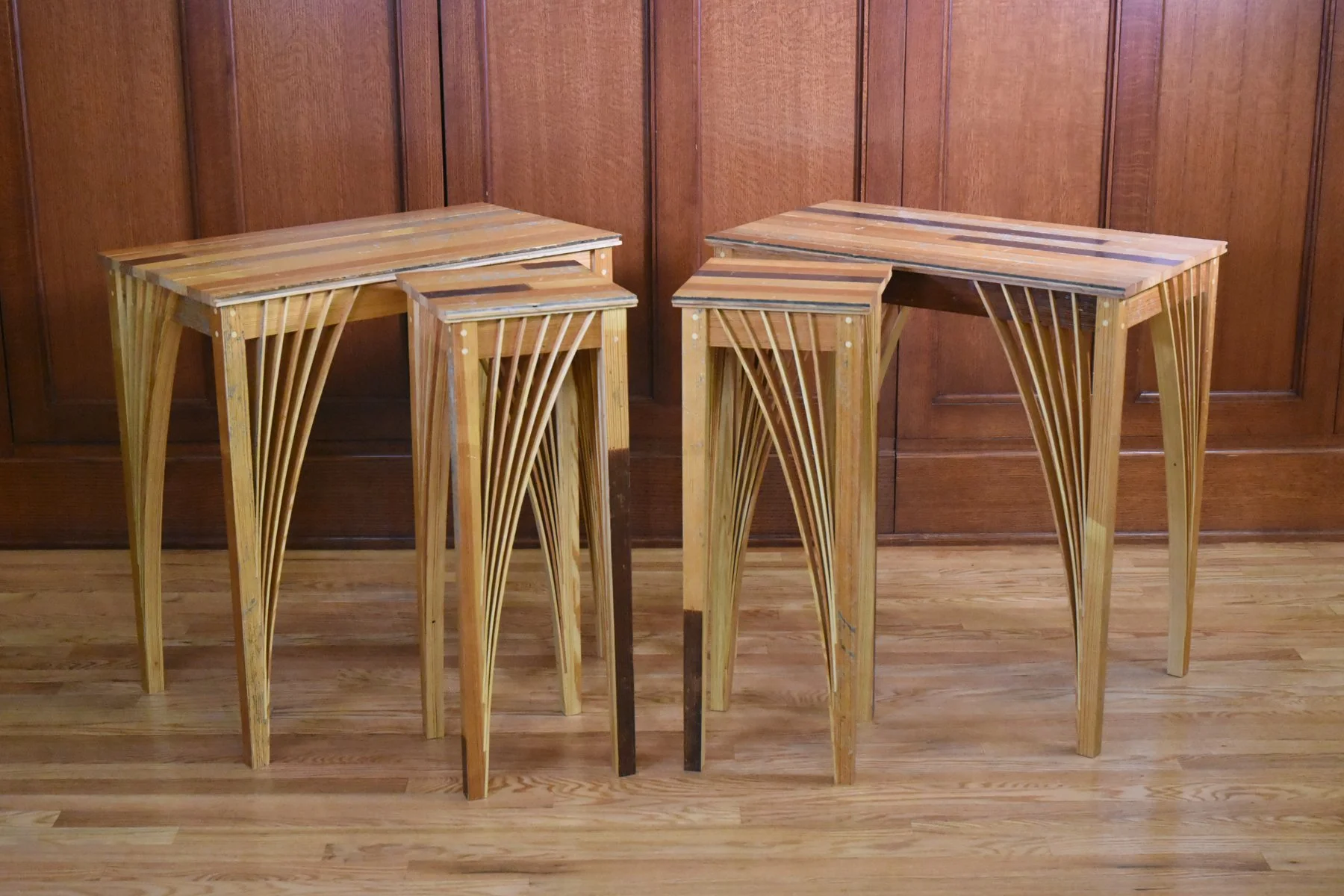
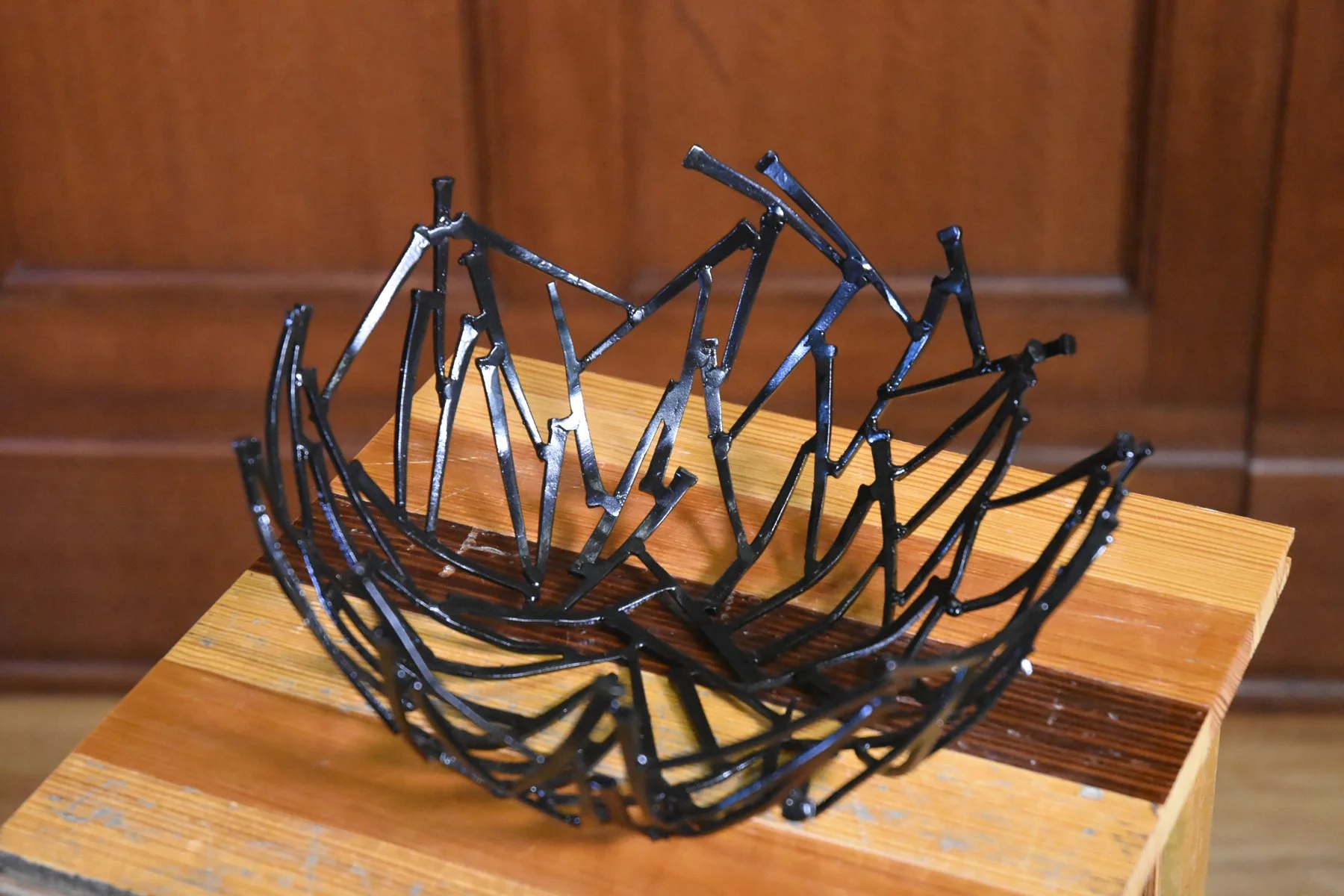
Reclaimed Southern Yellow Pine Flooring and Reclaimed Steel Nails, 2024
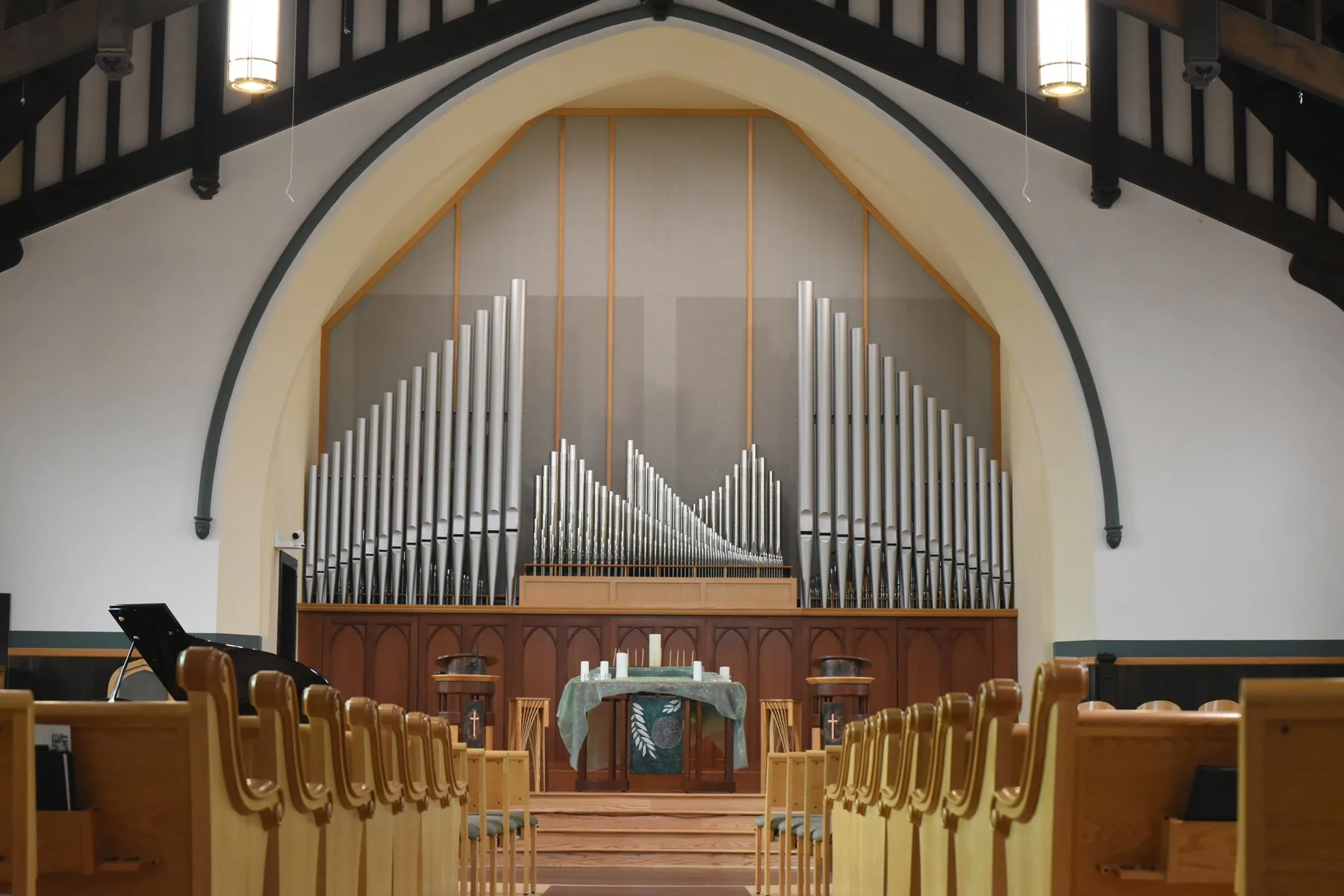
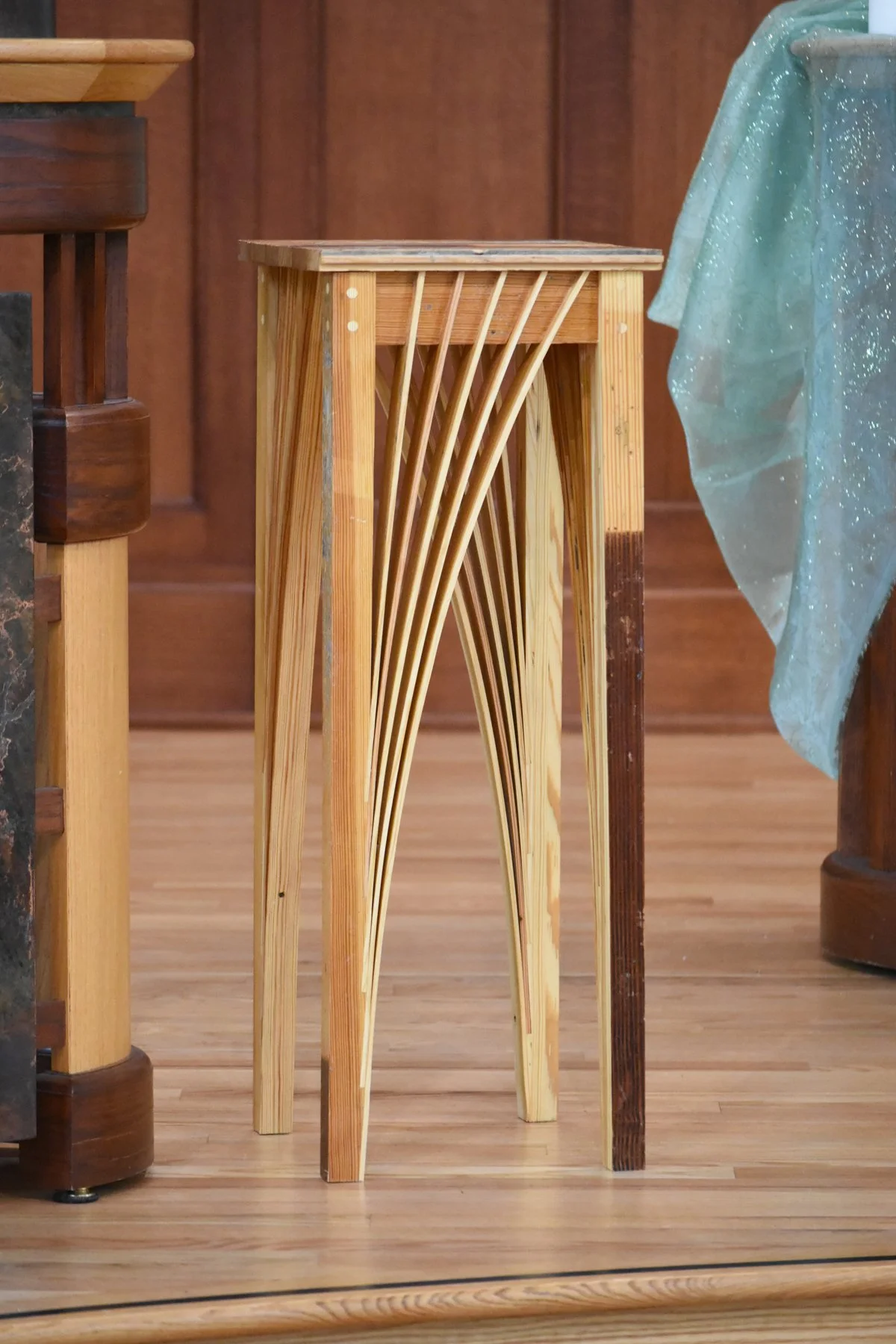
In 2024, I was commissioned by the First Congregational United Church of Christ in Boulder, Colorado to design and build a series of tables from original reclaimed flooring pulled from their sanctuary. All told, I made 4 tables, and 3 “baskets” from the nails pulled from the flooring during reclamation. The leg design follows two important guide posts - the material finish, generated by the congregation since it was installed, and the architecture of the sanctuary the pieces were coming out of and going back into. These North Stars affected my construction methods, milling ideology, and guided many of the design decisions throughout the process. Both the space and the material history hold a very special place in my heart, my mom was ordained in this church and it is where I grew up going every Sunday. So, to give back in such a meaningful way is a huge honor and point of pride. Special thanks to Chris Braudaway-Bauman, and the Ministry of Arts for making this project possible!
RISD Undergraduate THesis
2023
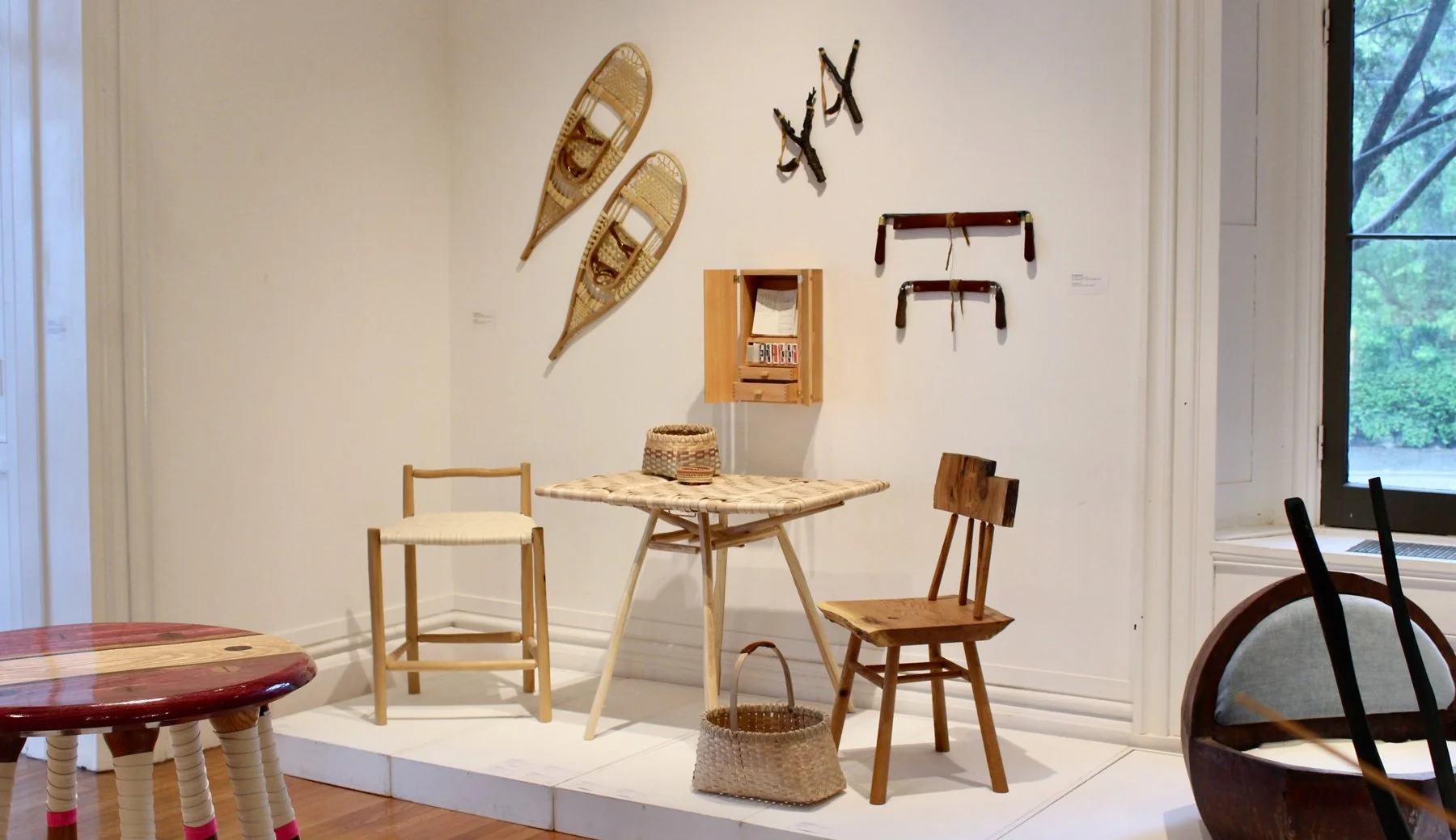
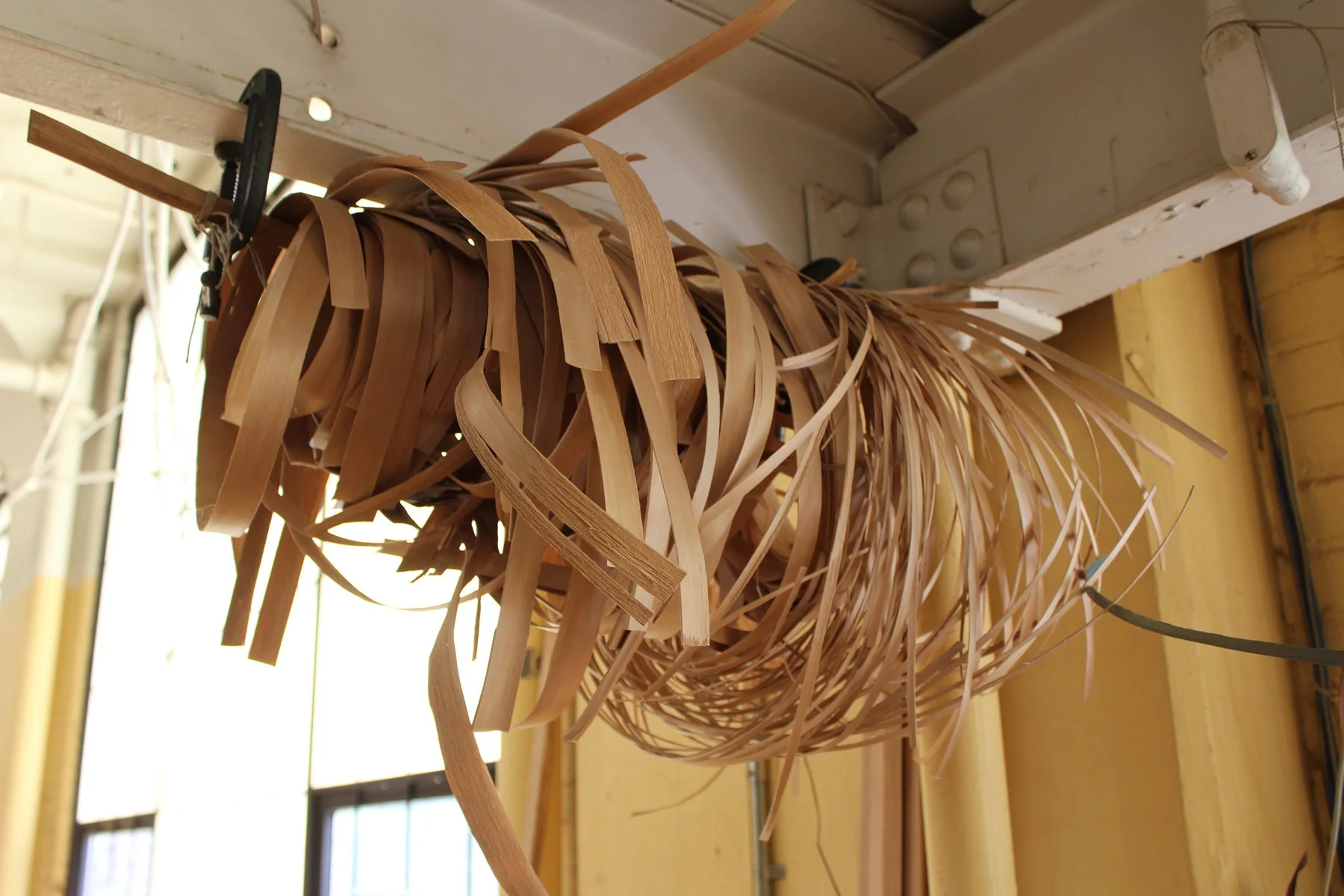
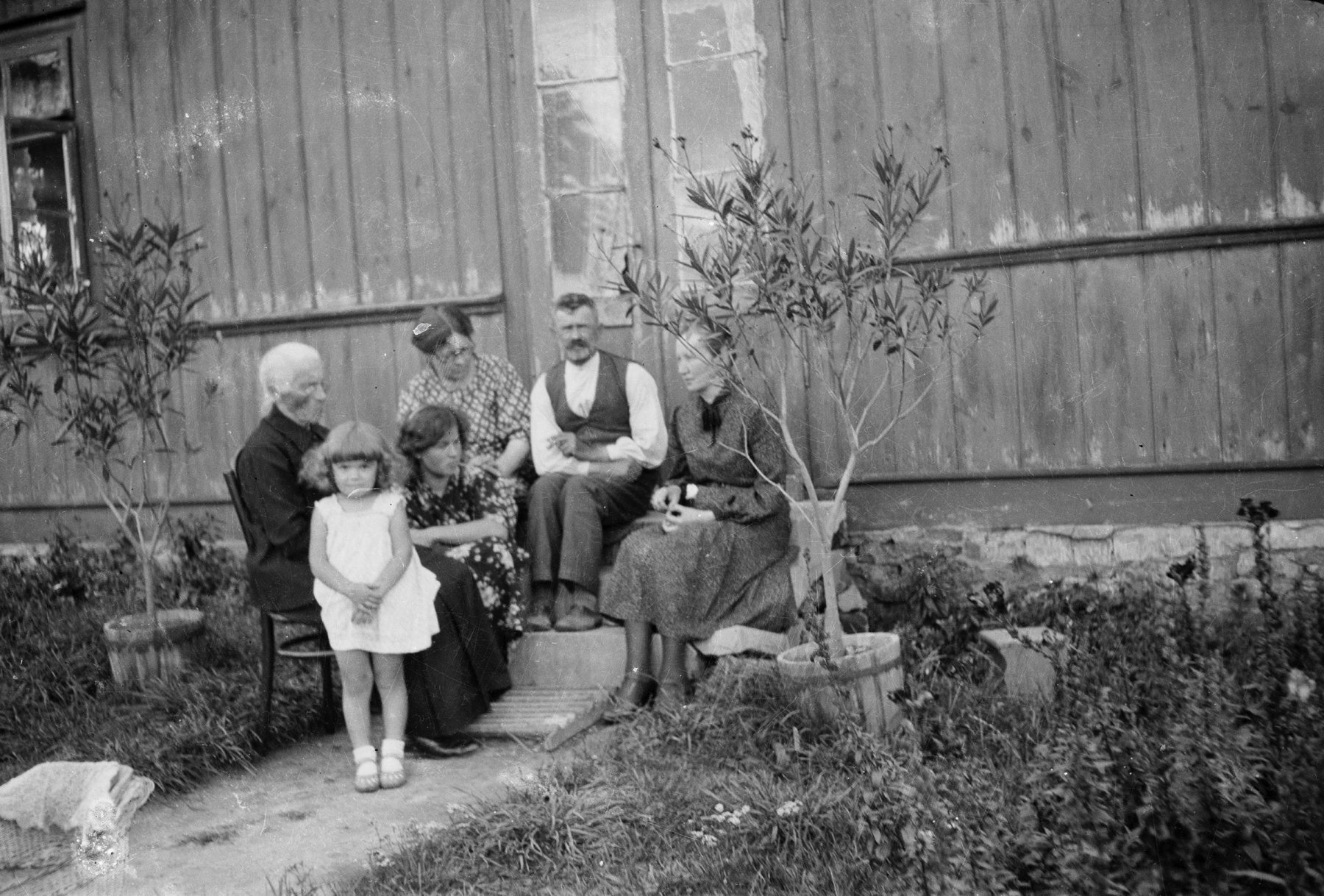
At the end of my undergraduate studies at the Rhode Island School of Design, I presented this body of work constructed using craft traditions of the American Northeast to explore my experience/memories growing up in a Polish-American family in the United states. Each piece leverages different traditional techniques to accurately define forms based on my cultural heritage in physical space.
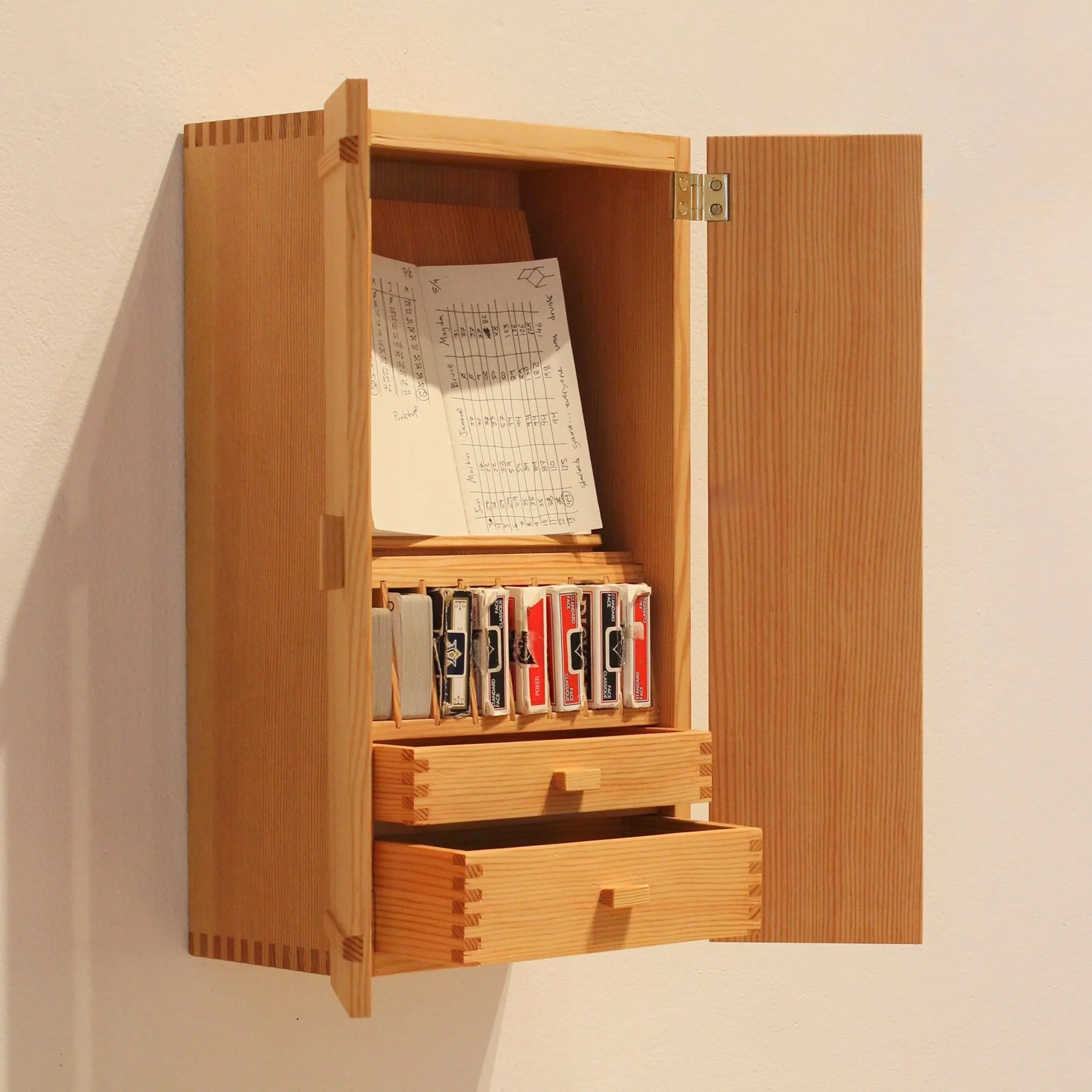
Card Cabinet
Douglas Fir, 2023
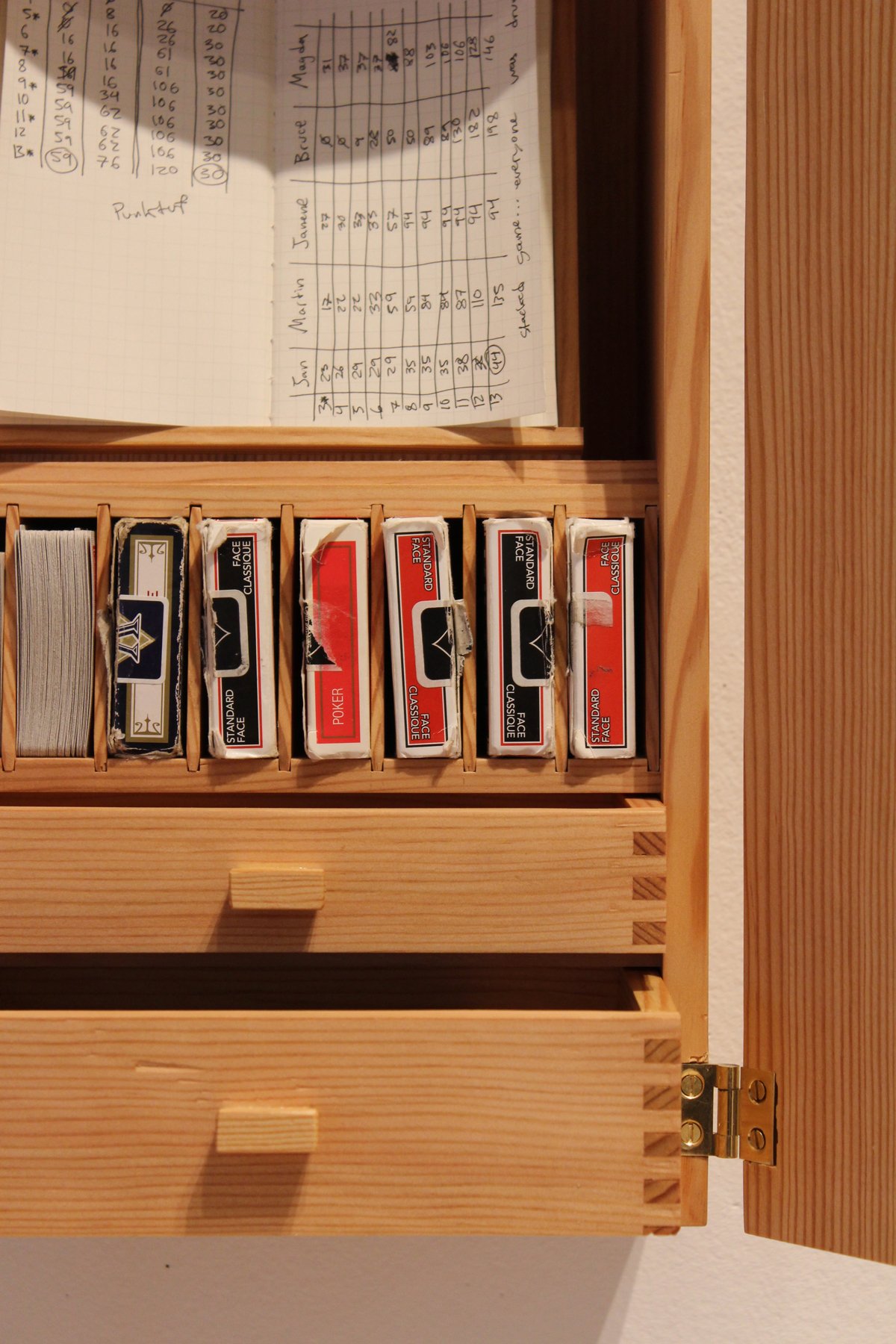
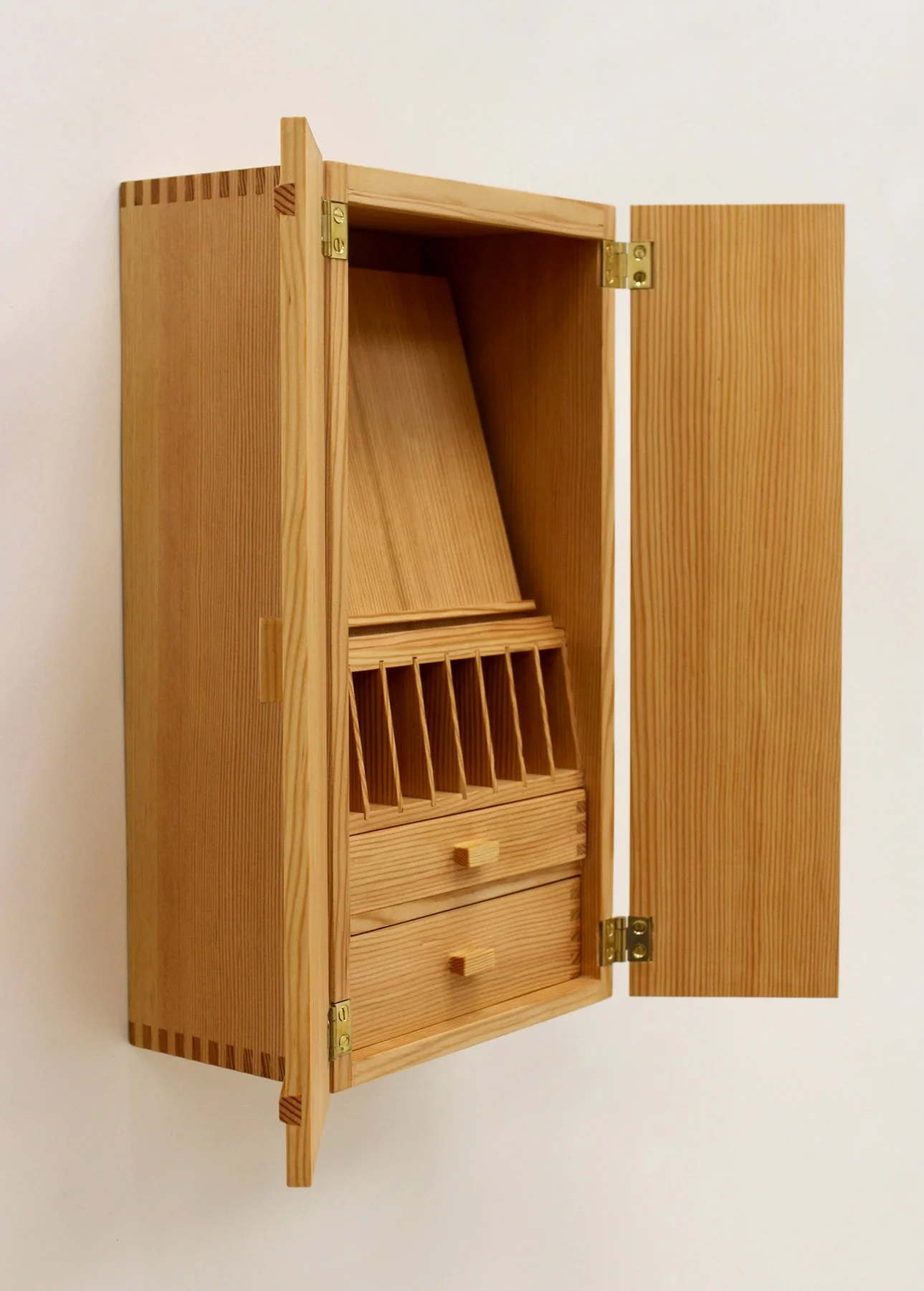
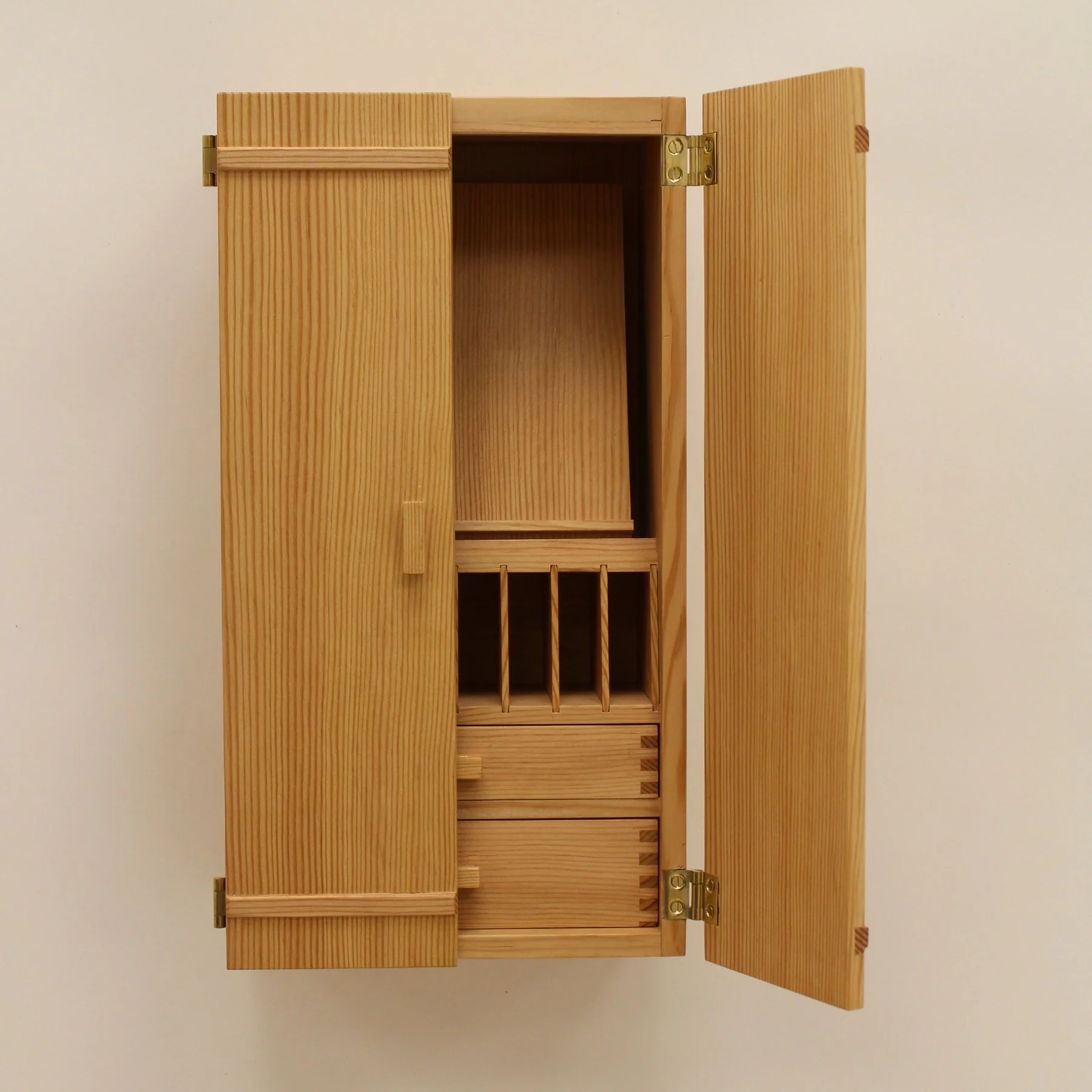
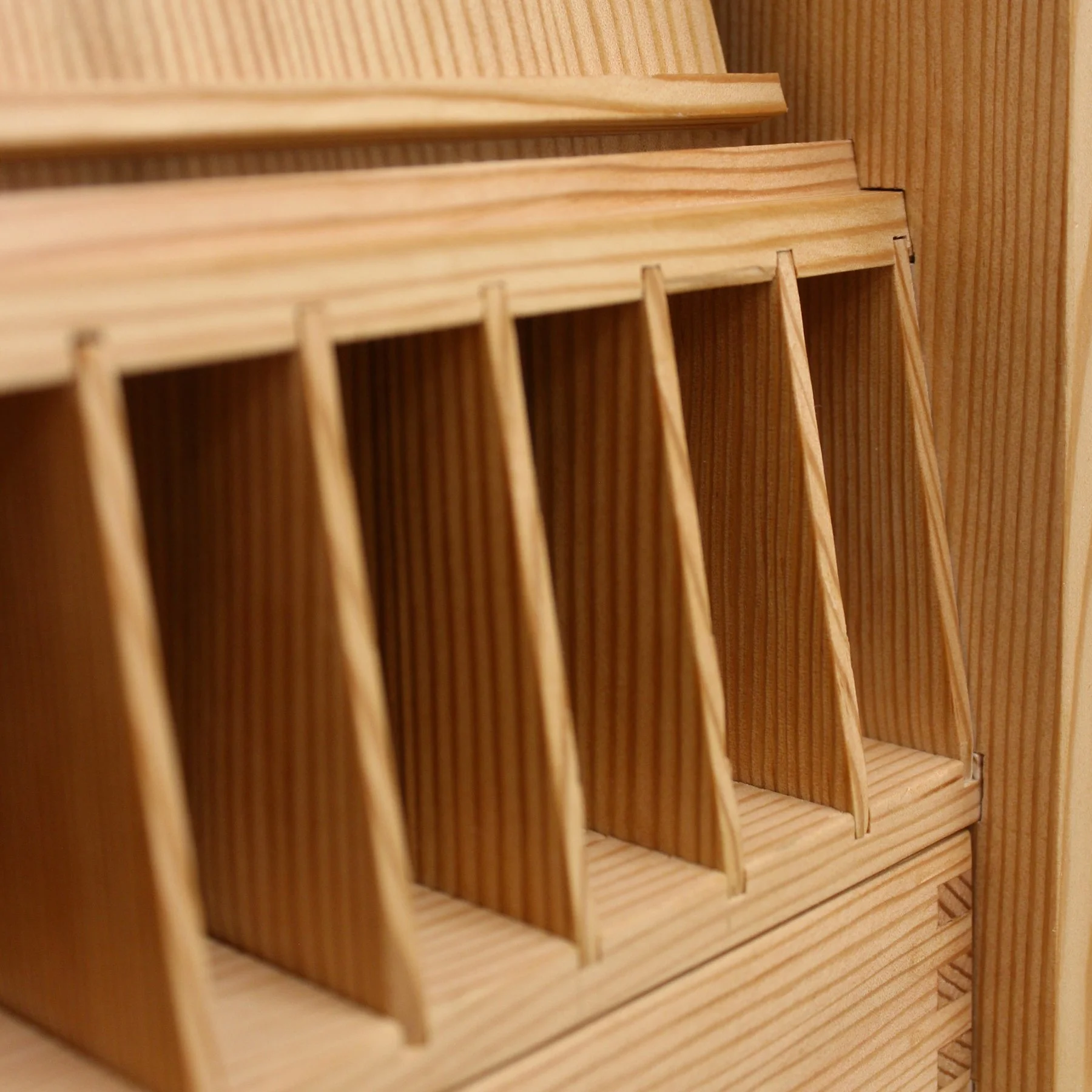
This cabinet is an investigation of Rybczynski/Leist card playing histories and stories. This case holds the ingredients to play hand and foot (or your game of choice) with up to 6 people sitting at the table, 8 decks of cards, pens/pencils and notebooks to keep score.
On my dad’s side of the family, Ciocia Ula was the card player. She taught my dad how to play bridge as soon as he was old enough to hold cards and my dad taught me. When I was a kid, my Babcia gave me a pine card box to bring back to the U.S. and this cabinet is largely based off its design.
On my mom's side of the family, my great grandma Dicey was the big card player. Her game of choice was Hand and Foot, a North American game related to canasta. My mom would spend summers with Grandma Dicey in Florida, and there she picked up the game and my mom taught me.
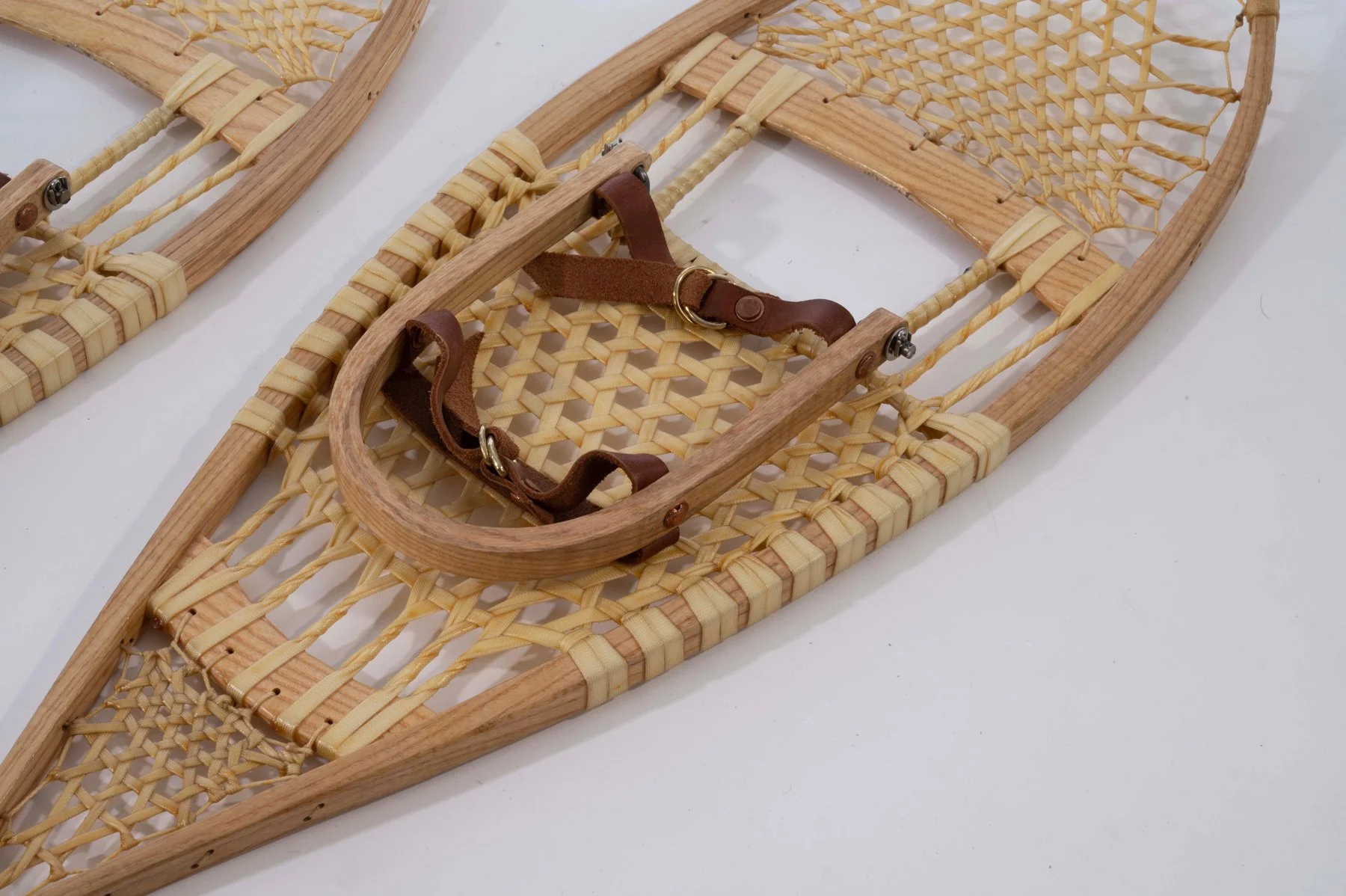
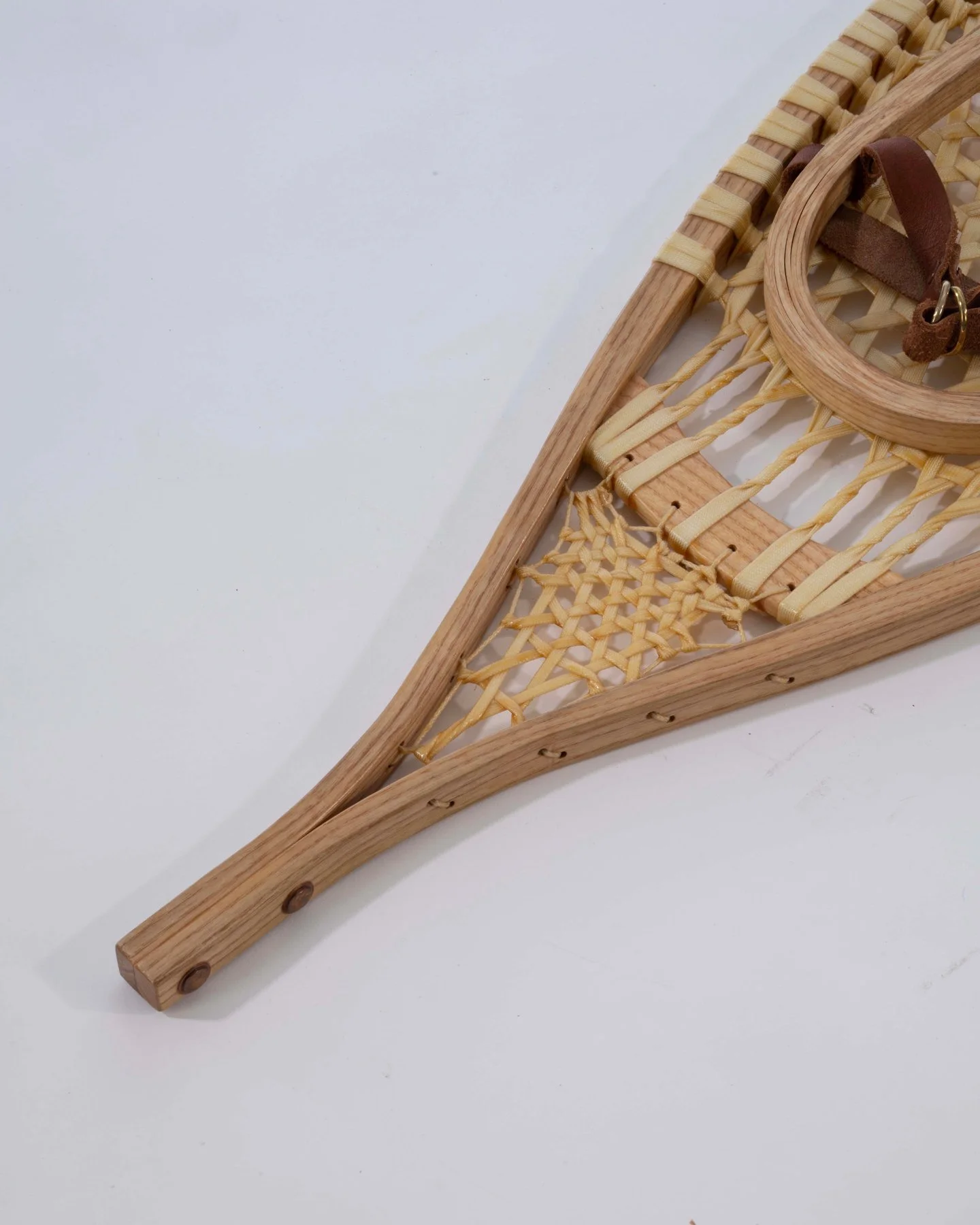
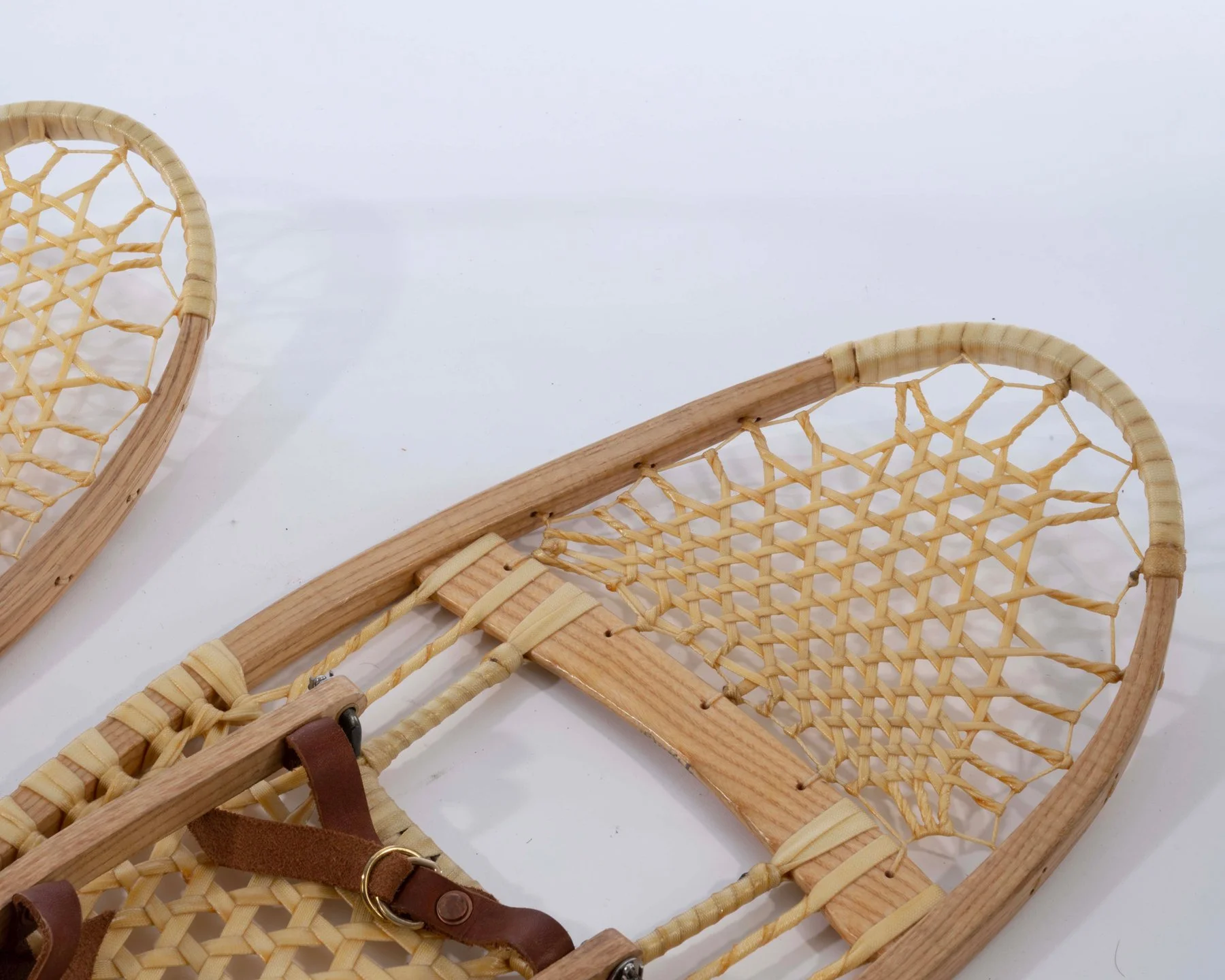
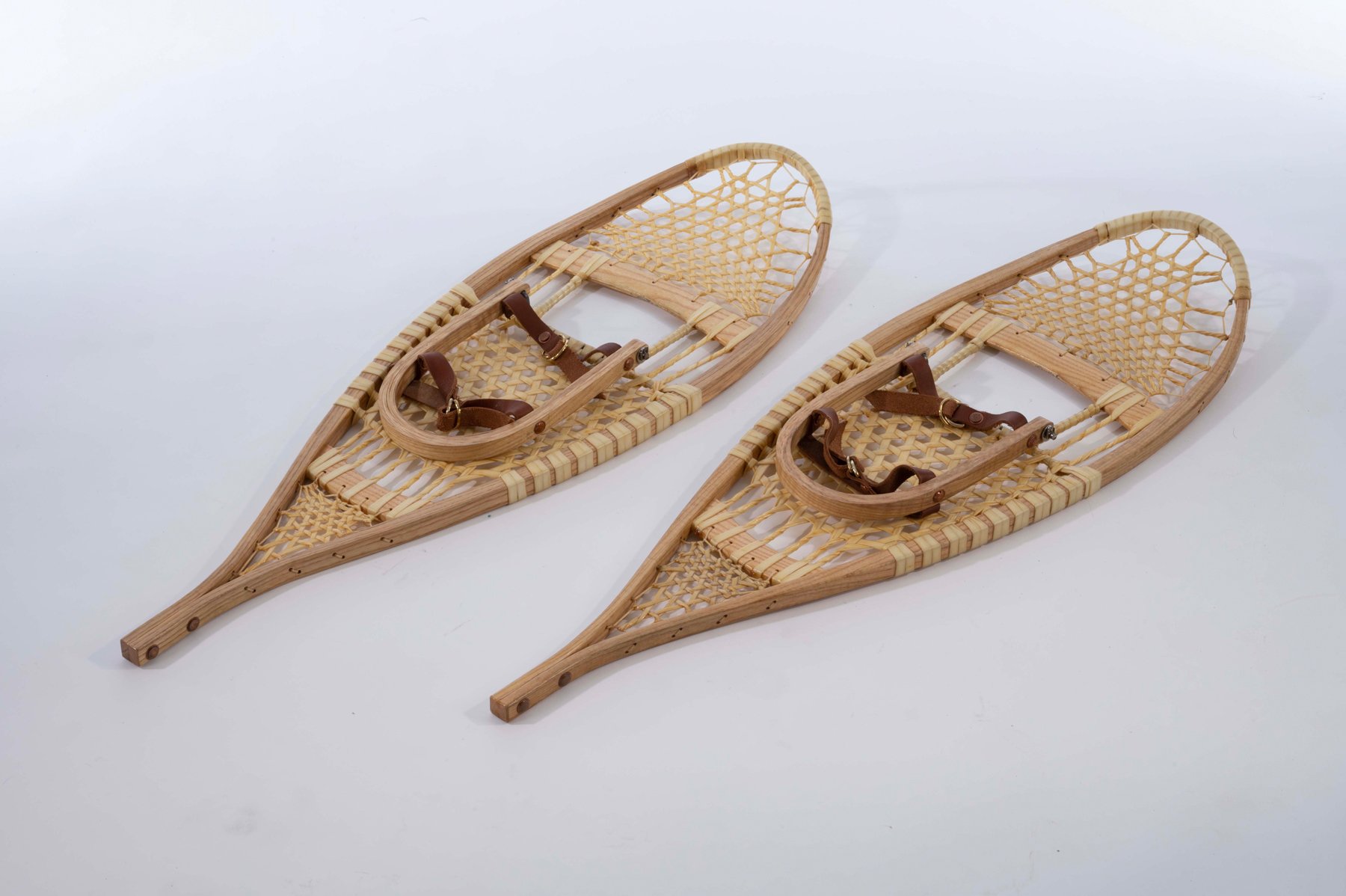
Showshoes
Steam bent Ash frames laced with nylon webbing, 2022
I am fascinated by movement – not only across landscapes, but also as a form of exploration and a way to investigate the environment we are inhabitants of. By extension, I find tools we build and construct to aid in the movement/dialogue as human+earth fascinating. The shape, size, and materials used to produce snowshoes have been endlessly altered and iterated on to a functionality depending on the subtleties of localized conditions around the world. These snowshoes are adapted to fit the size and shape of my body and the way I move, with the intention of exploring the American Northeast on foot. Employing elements of both traditional and modern, local building techniques – these shoes are my offering to the incredibly rich wilderness lineages/traditions of winter exploration and tool making which exist in the United States and around the world.
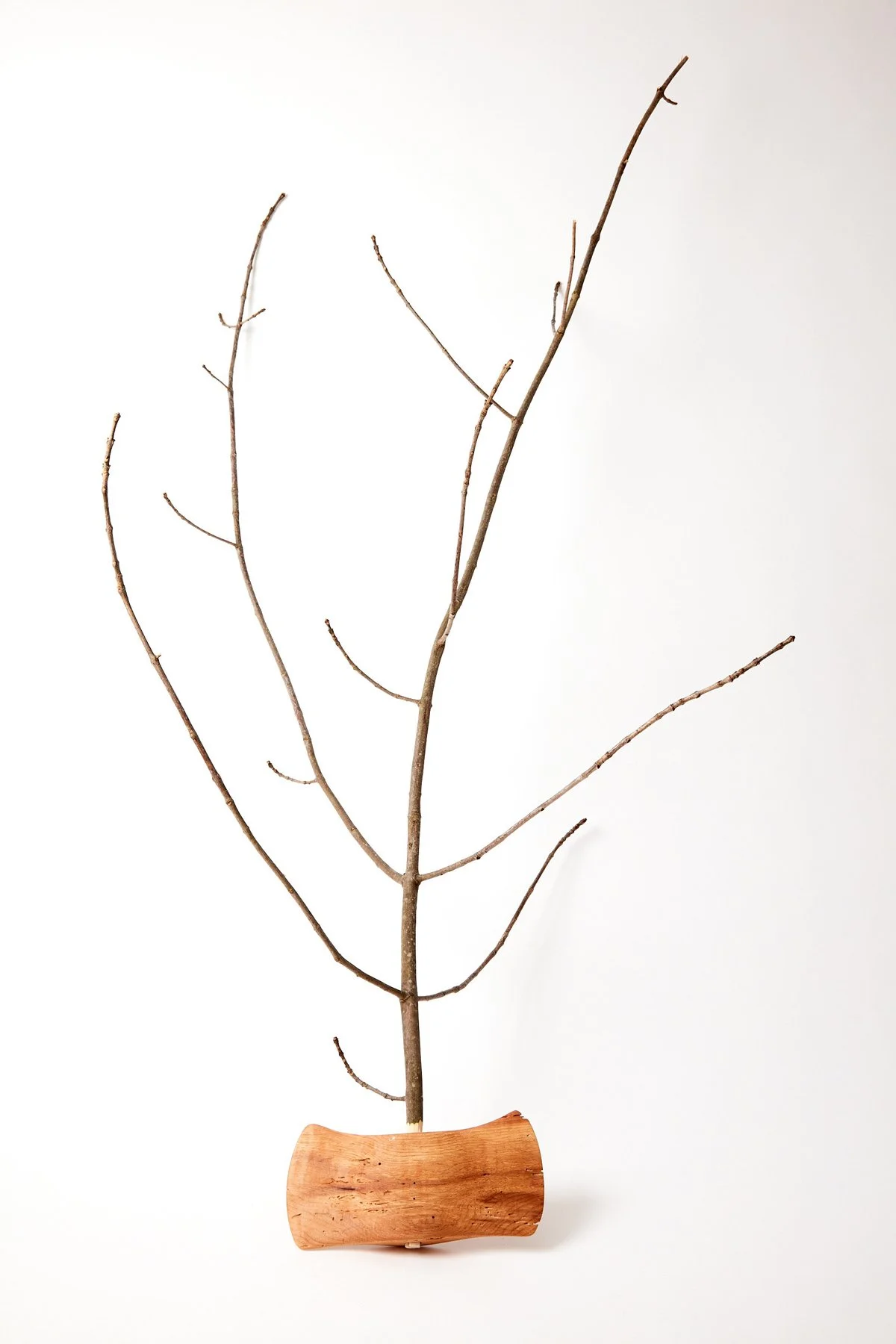
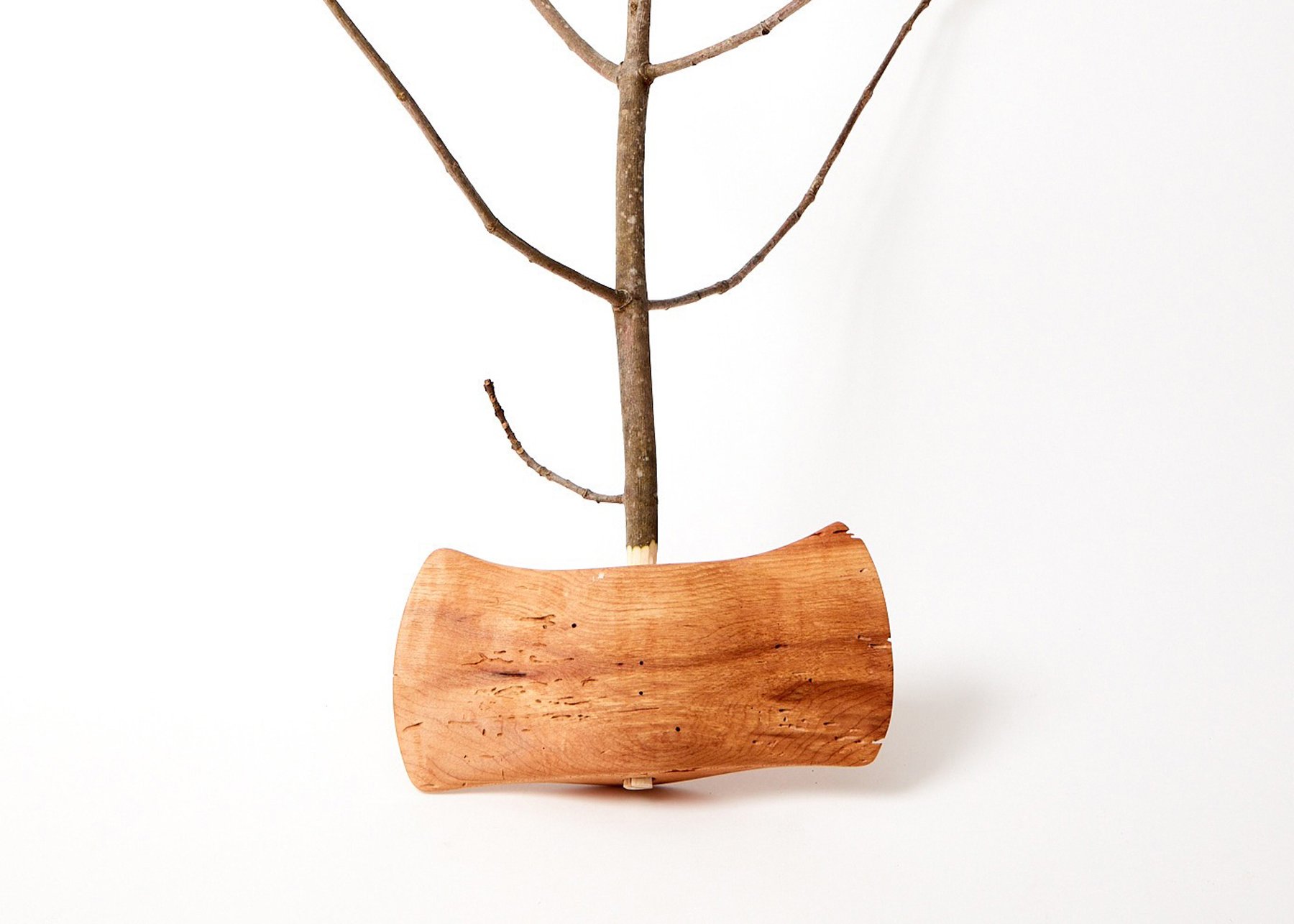
Witness Tree: Double Bit Axe
Maple head and Ash sapling handle, 2022
Forest cutting was used as a means for creating tillable farmland for colonists moving to the “Green Mountain State'' in the early 18th century. But as the industrial revolution grew in the United States and wood consumption skyrocketed from the 1760’s to the 1830’s, logging quickly became the largest industry in New England and heavy deforestation followed suit. It is estimated that 36 million board feet of lumber and 300 ship masts were being exported from the American Northeast annually. New tools such as the double bit axe were introduced, streamlining hand felling and splitting causing a 60% decrease in forest cover statewide between 1800 and 1880. Within a span of 80 years Vermont's forest cover had declined drastically, from 80% to 20%.
George Perkins Marsh, credited with writing the first book related to the idea of conservation in the United States, wrote his text in 1864 which began a cultural shift in humans' approach to forest resources in the American Northeast. His book challenged the common and accepted idea that humans made no impact on nature, especially in the realm of forest ecology. Man and Nature was a foundational text for many of the stewardship programs we know today at every level of government such as the National Park Service to private forestry firms and land owners alike. Today, the forest cover of Vermont has been regenerated to 90%, better than it was before colonialism.
To explore this decline and following increase I made an “axe”. The double bit style head of this tool was carved from maple wood which came from a tree previously standing in the Marsh Billings Rockefeller National Historical Park. In contrast, the handle growing from the head is made from an ash sapling that I harvested during a visit to the park. The sapling was cleared from a historical stand of Norway spruce planted by Fredrick Billings in 1887. This stand borders a viewshed envisioned and created by Billings overlooking Mt. Ascutney in the distance. The Norway Spruce are getting older, and the decision to cut the hardwood saplings was made in an attempt to further their life as a historical record of the Billings Era of authorship on the land. The head and handle are joined together how an axe would be traditionally, with a wedge. This “axe” is to be stored with its head down, in permanent waiting as the reforested handle grows out of its history.
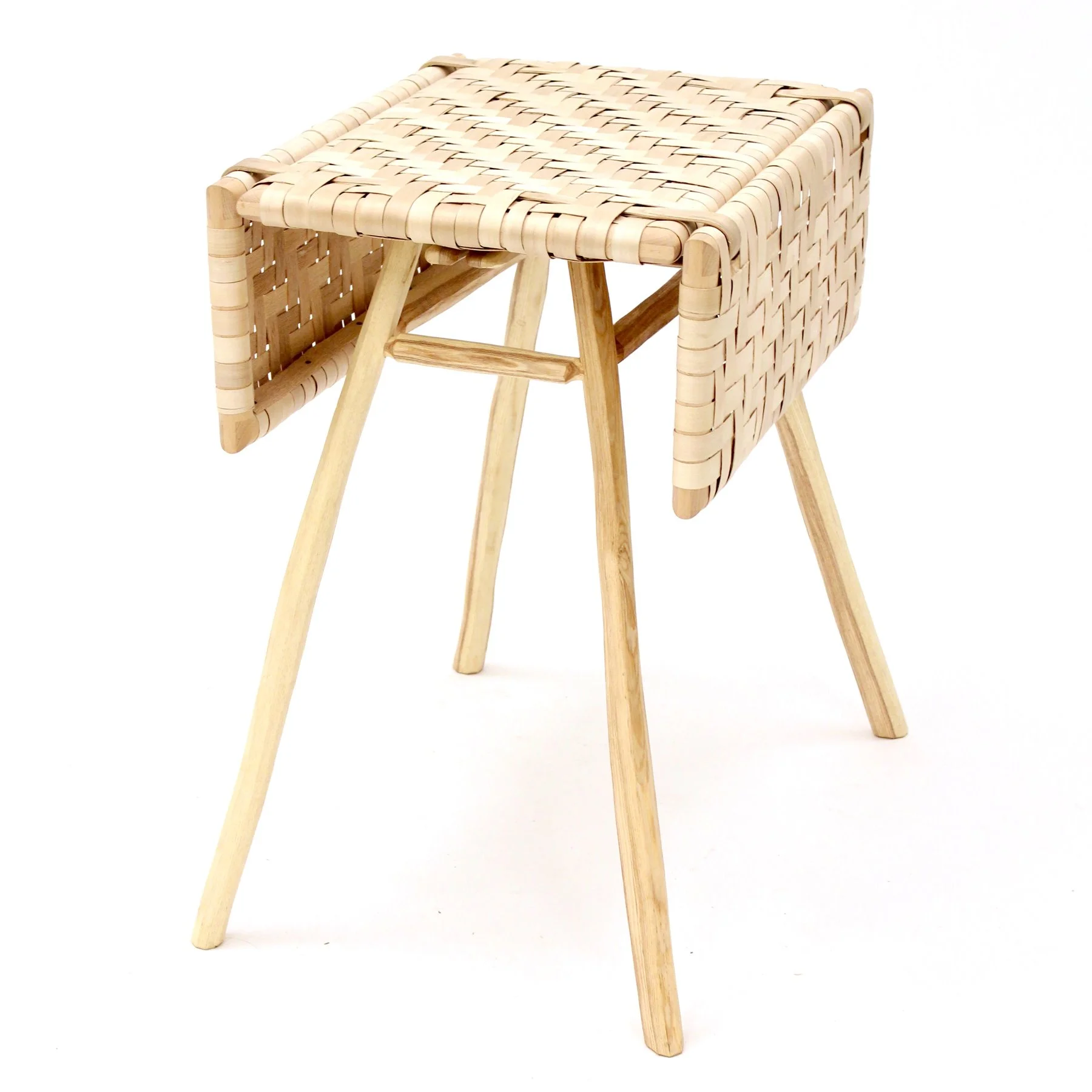
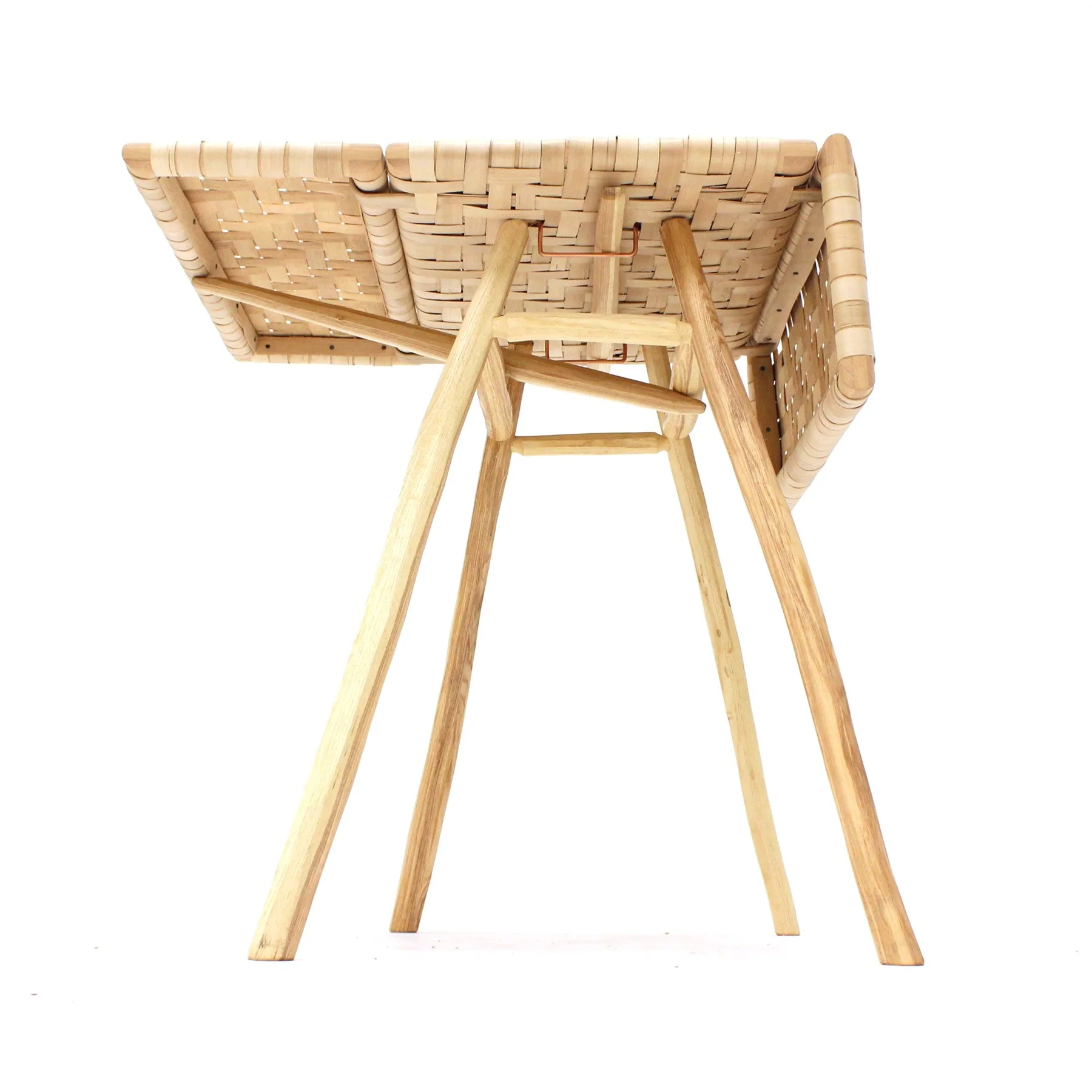
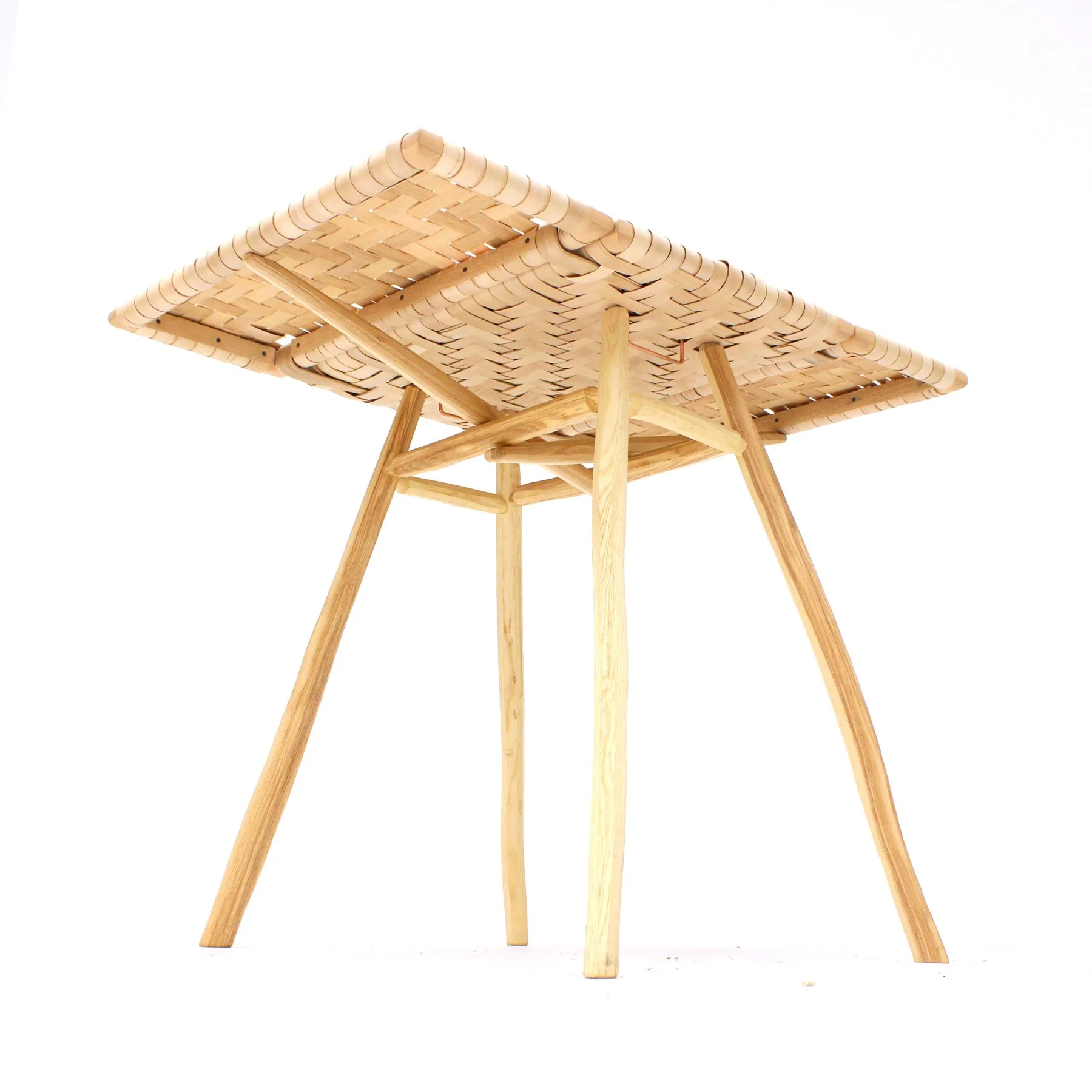
Woven Table
Hand processed Black Ash, 2023
At the end of my undergraduate studies, I presented a body of work for my thesis exhibition based around the study of craft traditions of the American North East; namely green woodworking and Black-Ash basketry. The centerpiece of the collection is this table. It was built using greenwood working tools and techniques and features a range of adapted Black Ash basketry practices to create wooden hinges, and a weight bearing suspension surface.
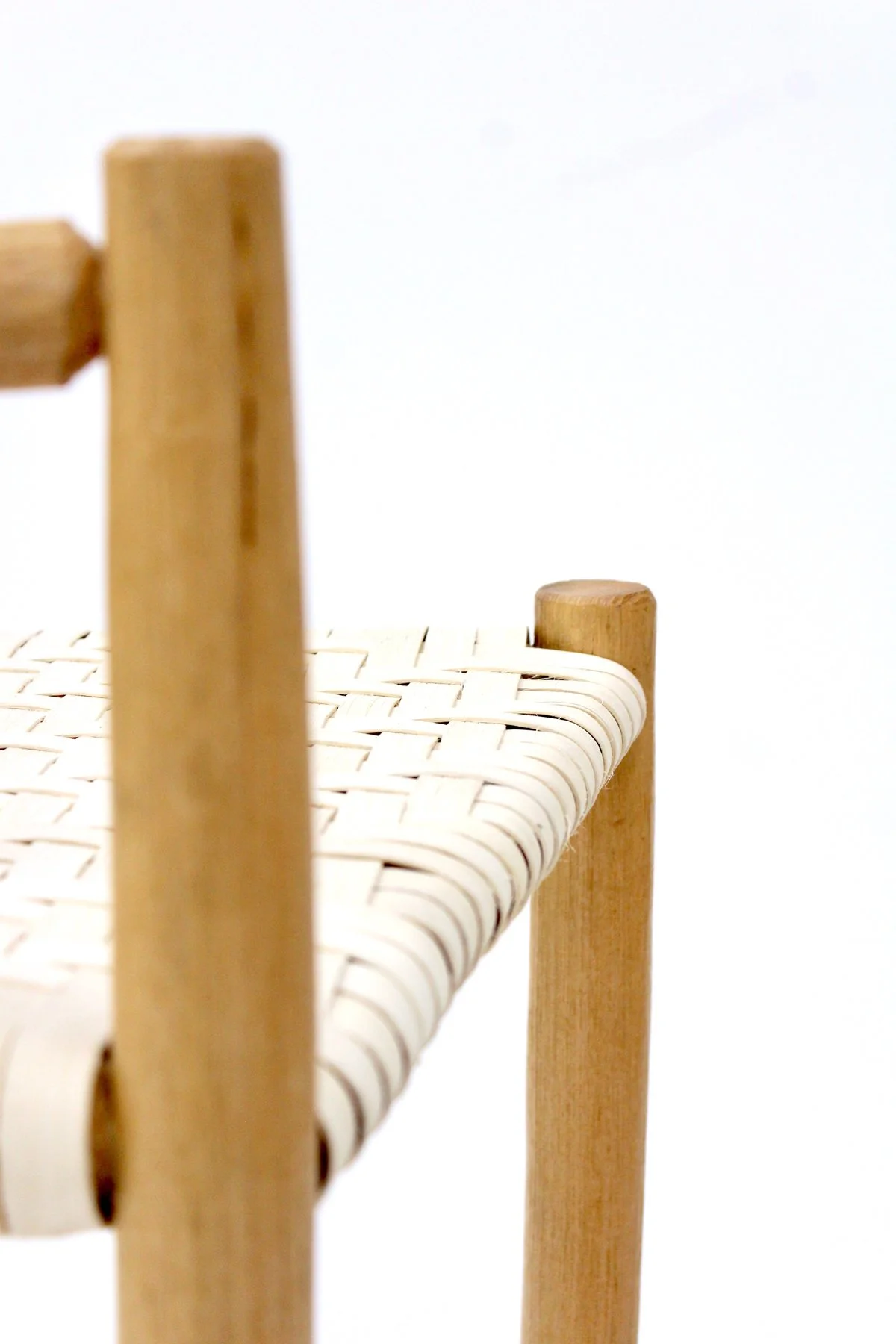
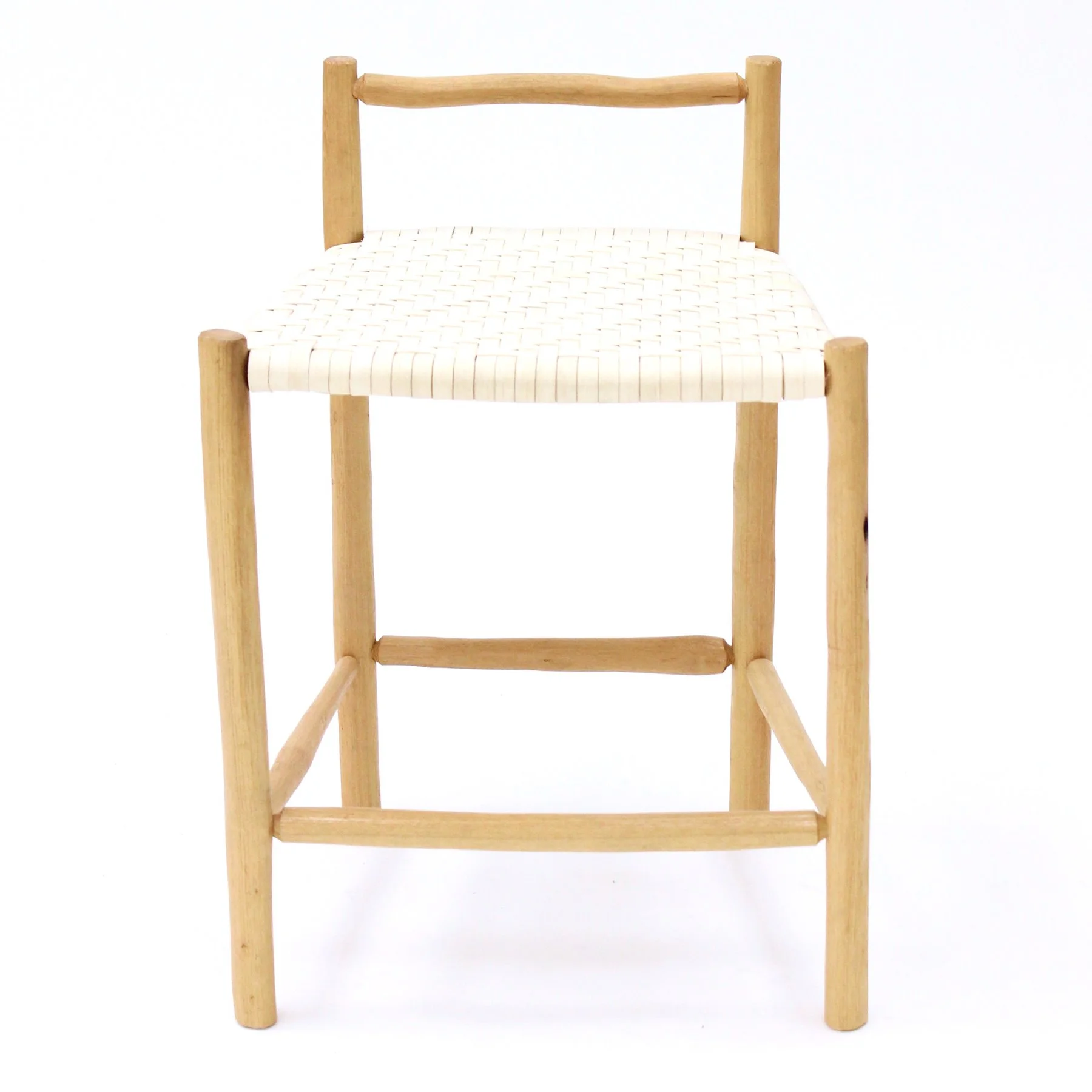
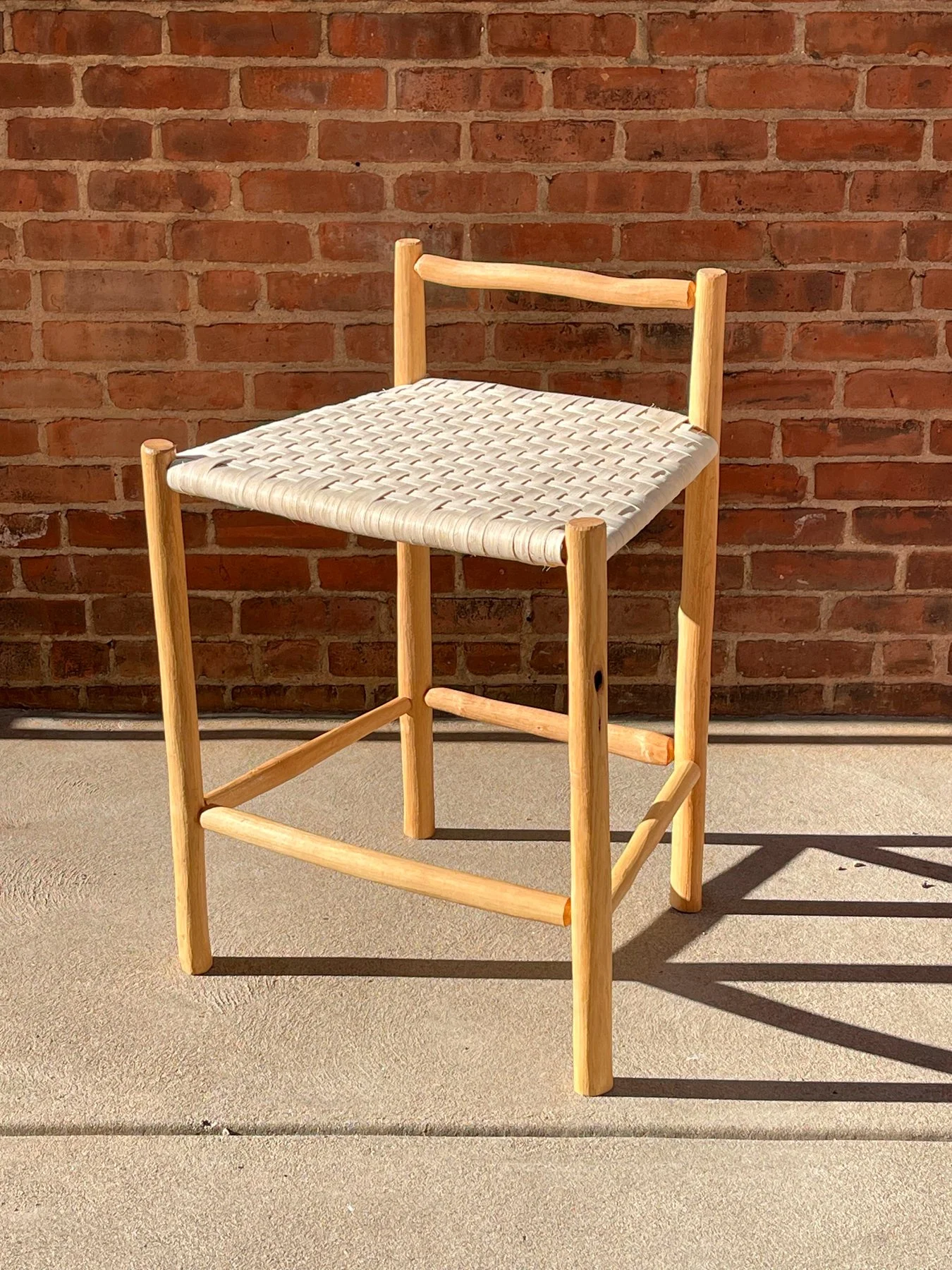
Woven Chair
Riven Black Locust and Flat Reed, 2023
A special thank you to Steve Emma for graciously opening his studio and spending time showing me tips and tricks, talking through problems, and divulging his professional secrets. This project would not have been possible without his help, and I am grateful for his willingness to share his love for his craft.
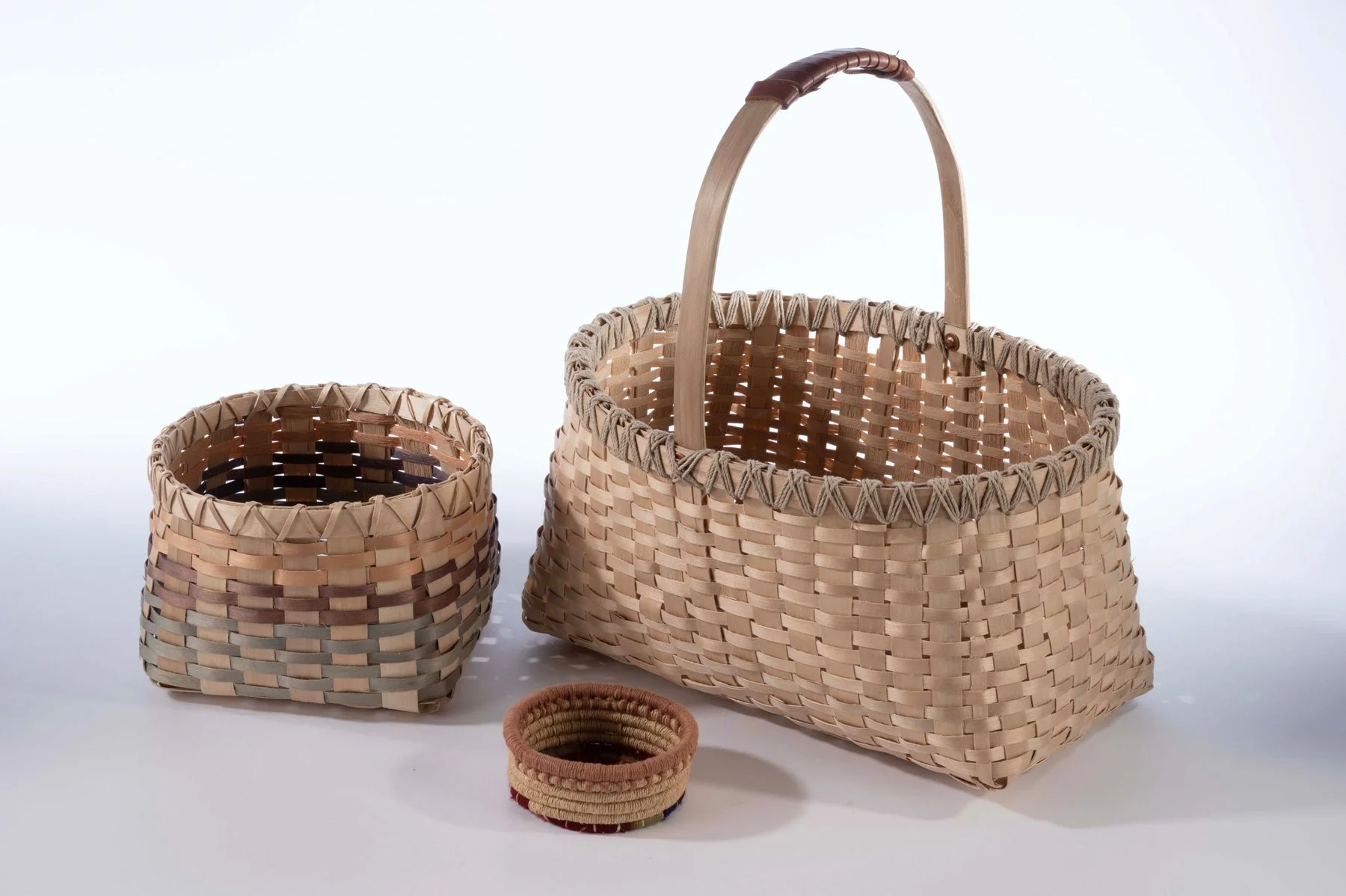
Baskets
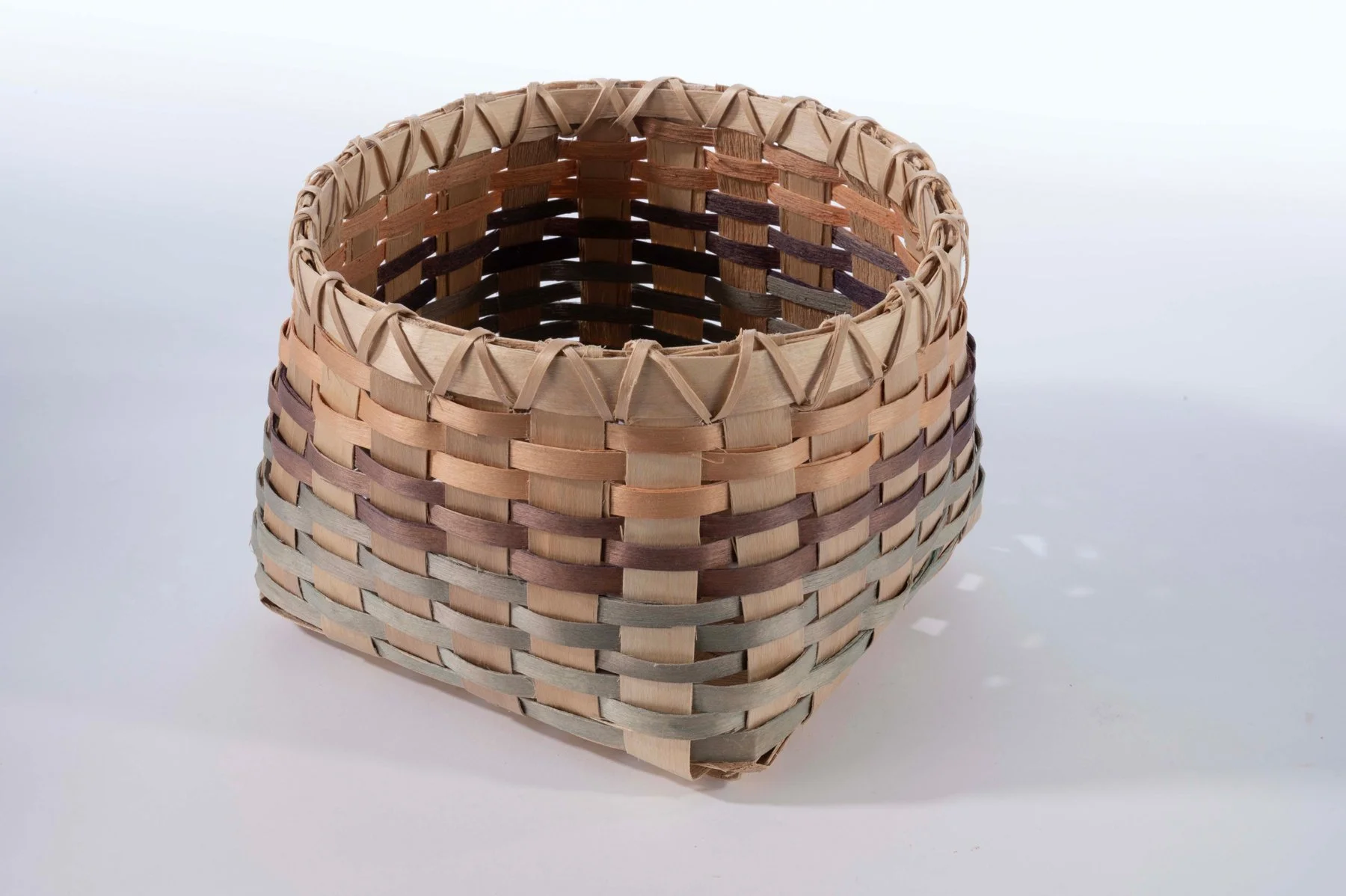
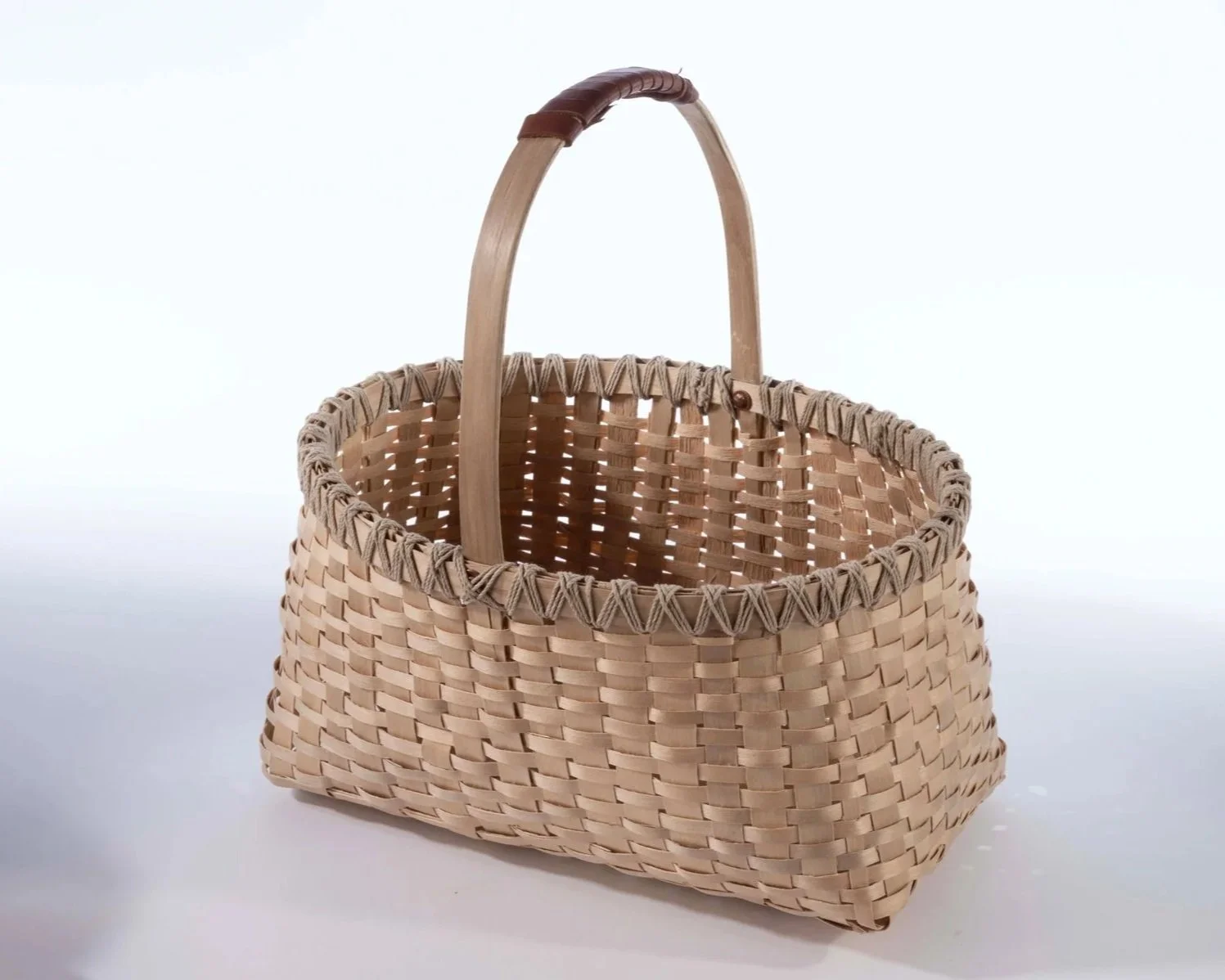
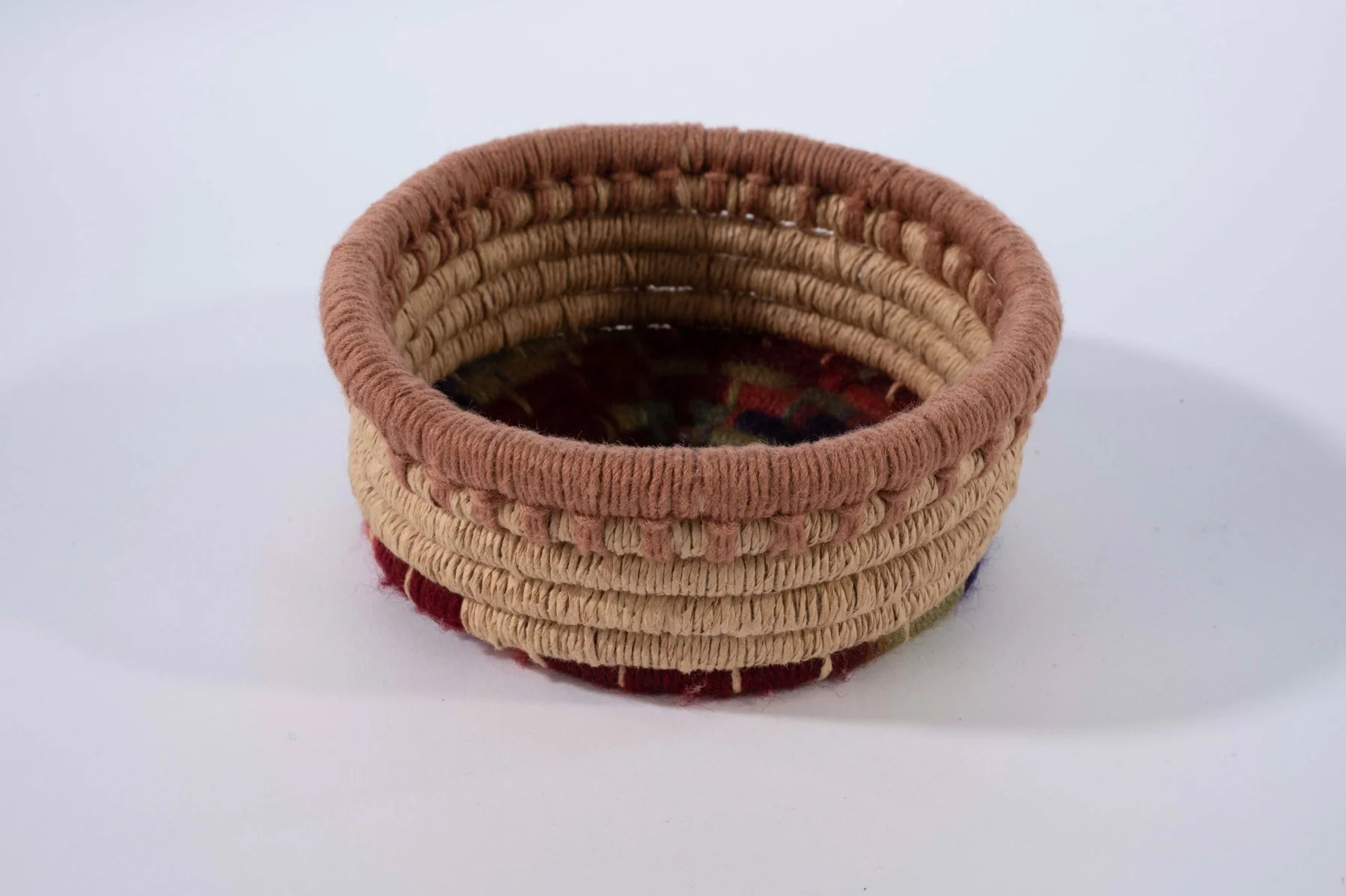
Black Ash basket splints, Natural Dyes, and Yarn/Cordage, 2023
The splints used to make these baskets were hand processed from a tree harvested in Vermont. I did all the natural dyeing with my good friend Clara Boberg who is an amazing forager and textile artist. A special thank you to them!